



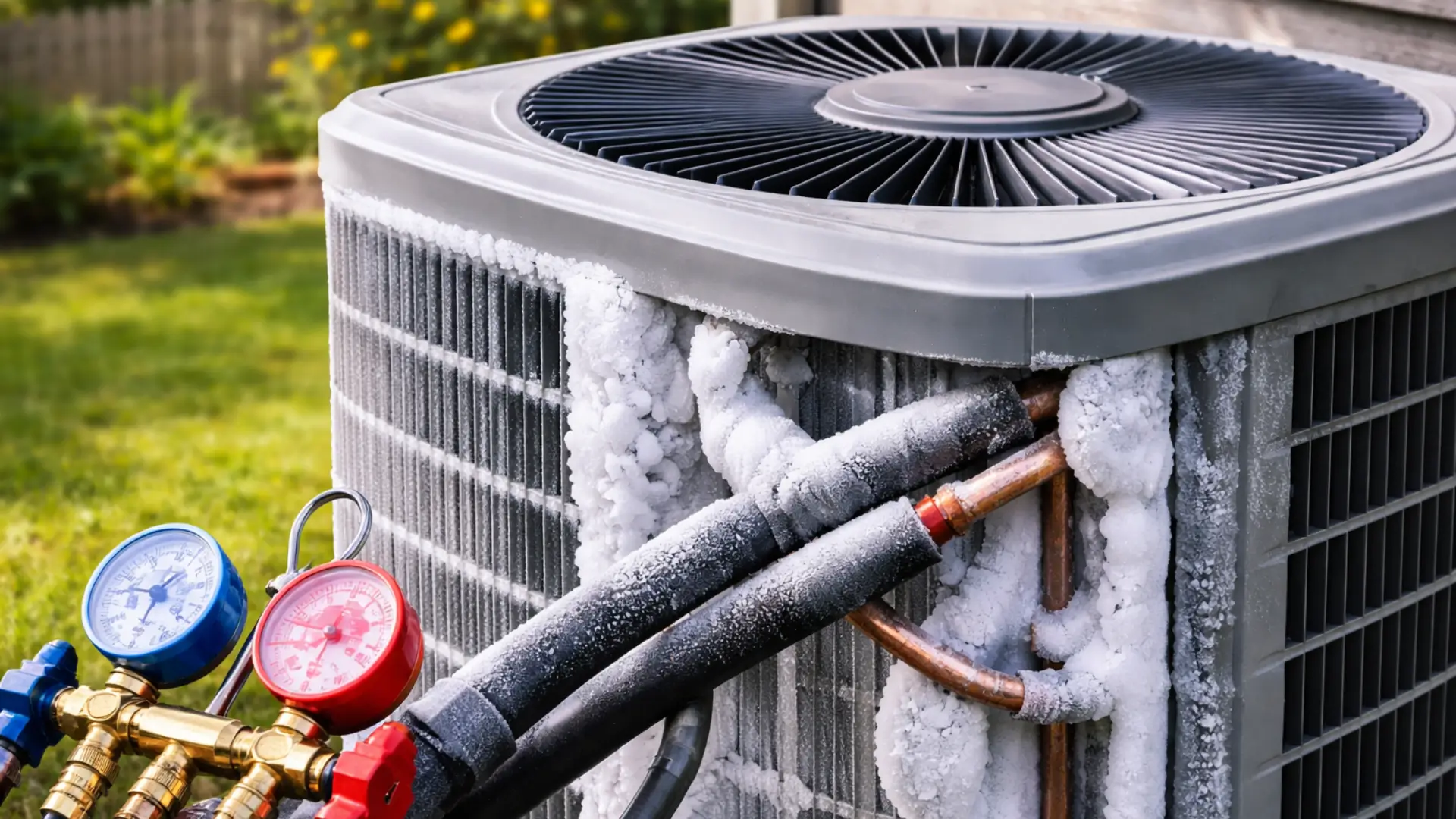


It sounds strange, but one of the most common summer AC problems is freezing. Your air conditioner runs for hours in extreme heat, yet ice can still build up inside the system. When this happens, cooling performance drops fast, energy bills climb, and your home can become uncomfortable in a matter of minutes.
Many homeowners don’t realize what’s happening until the unit stops working properly. Understanding the early signs and root causes can help you prevent costly repairs and restore cooling quickly.
Warning Signs Your AC May Be Frozen
Before ice becomes visible, your system usually shows subtle symptoms. Watch for these indicators:
- Warm or weak airflow coming from vents
- AC running constantly but not cooling
- Excess humidity indoors
- Water pooling around the indoor unit
- Visible frost or ice on refrigerant lines or coils
If you remove the access panel and see ice, that confirms the problem. However, even without visible frost, freezing can still be present inside the evaporator coil.
How Your AC Can Freeze in Hot Weather
Air conditioners cool your home by circulating refrigerant through coils that absorb heat from indoor air. As warm air passes over the evaporator coil, heat transfers into the refrigerant, and cooler air is sent back into your home.
For this process to work correctly, two conditions are essential:
- Proper airflow across the coil
- Correct refrigerant pressure
If either one drops too low, the coil temperature can fall below freezing. Moisture from the air then turns into ice, gradually blocking airflow even more and worsening the problem.
1. Main Cause: Restricted Airflow
Poor airflow is the most frequent reason AC units freeze.
When not enough warm air moves across the evaporator coil, the coil gets excessively cold. Moisture accumulates and freezes instead of draining away. Common airflow restrictions include:
- Dirty or clogged air filters
- Blocked supply or return vents
- Closed interior doors
- Dust buildup on coils
- Malfunctioning blower fan
Even a heavily clogged filter alone can trigger freezing.
How to Fix It
- Turn off the cooling mode immediately
- Switch the system to fan-only mode to help thaw the ice
- Replace or clean the air filter
- Ensure vents are open and unobstructed
- Allow several hours for complete defrosting
Regular filter replacement typically every 1 to 3 months is one of the easiest ways to prevent this issue.
2. Main Cause: Low Refrigerant or Mechanical Problems
Your AC relies on precise refrigerant levels to maintain proper pressure and temperature. If refrigerant leaks out or system components malfunction, pressure drops and the coil temperature can plunge below freezing. Possible issues include:
- Refrigerant leaks
- Damaged refrigerant lines
- Faulty expansion valve
- Broken blower motor
- Dirty or failing condenser components
Low refrigerant is not just a performance problem, it can damage the compressor, which is the most expensive part of the system.
How to Fix It
Unlike airflow issues, refrigerant problems require professional service.
- Turn off the system to prevent further damage
- Contact a licensed HVAC technician
- Have leaks located and repaired
- Recharge refrigerant to manufacturer specifications
Temporary fixes won’t solve leaks permanently, so proper repair is essential.
3. Main Cause: Running the AC in Cool Outdoor Conditions
Air conditioners are designed to operate within a specific temperature range. When outdoor temperatures drop too low – especially at night, the system may overcool internally and freeze.
This often happens during mild summer evenings or early fall weather when homeowners continue running the AC unnecessarily.
How to Fix It
- Turn off the AC when outdoor temperatures fall below about 16°C (60°F)
- Use natural ventilation instead
- Install a programmable thermostat to adjust automatically
- Consider a low-ambient control if cooling is needed year-round
Letting the system rest during cooler periods prevents stress and ice buildup.
Preventing Future Freeze-Ups
Most freezing issues are avoidable with routine maintenance. A well-mainted system runs more efficiently, lasts longer, and delivers consistent comfort. Preventive steps homeowners should follow:
- Replace filters regularly
- Keep vents clean and unobstructed
- Schedule annual professional maintenance
- Check refrigerant lines for visible frost
- Keep the outdoor unit clear of debris
- Monitor unusual noises or performance changes
Final Thoughts
A frozen air conditioner is frustrating but rarely random. In most cases, it’s caused by restricted airflow, refrigerant issues, or operating conditions outside the system’s design limits.
Addressing small problems early can prevent major breakdowns and expensive repairs. With proper care, your AC can deliver reliable cooling even during the hottest months.
If freezing occurs repeatedly despite basic fixes, professional inspection is the safest next step. Ignoring the issue can lead to permanent damage and complete system failure.


