



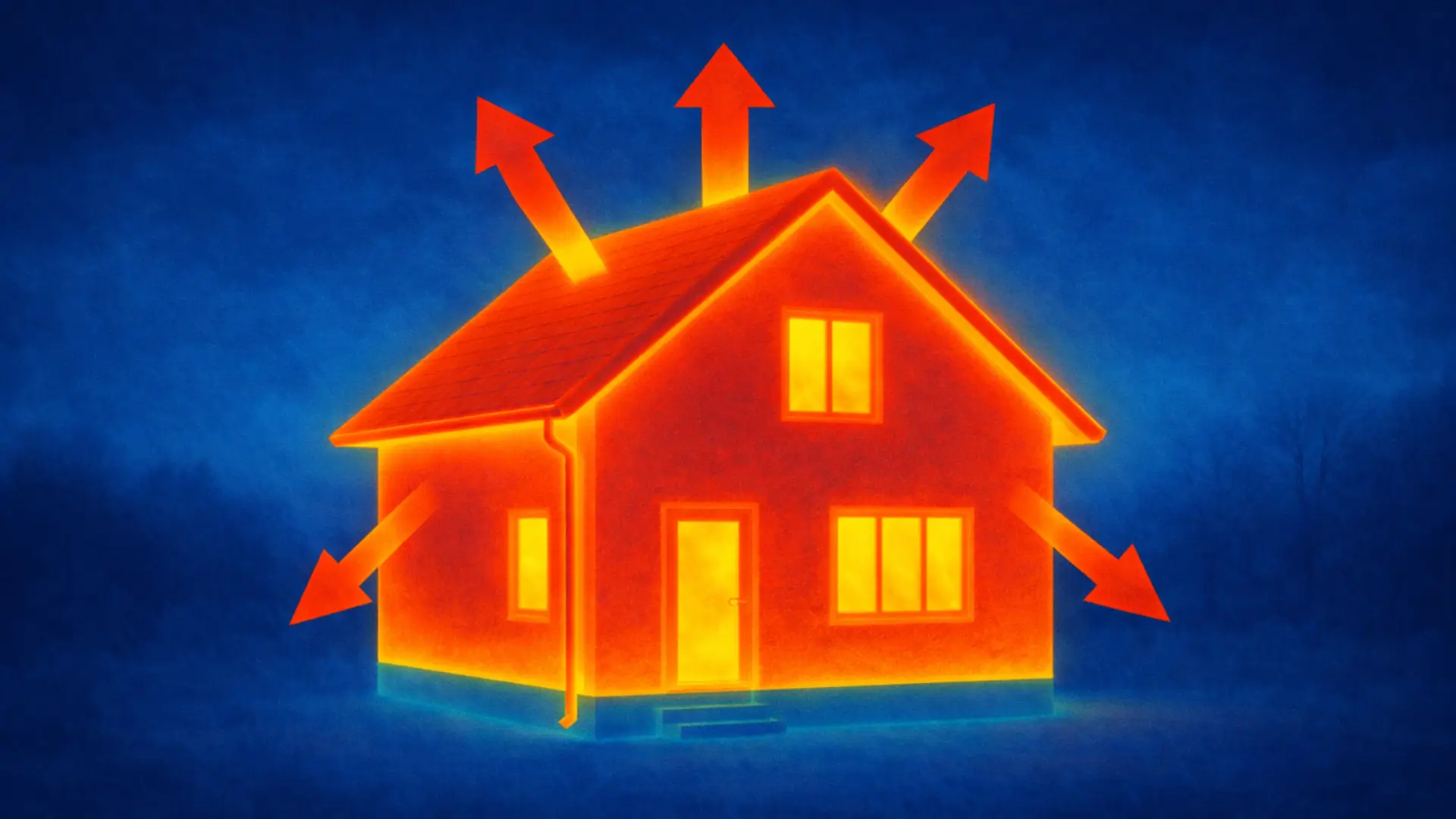


Heat loss in your home is one of the most common reasons behind rising heating bills, uneven indoor temperatures, and discomfort during colder months. Many homeowners try surface-level fixes, but without understanding where heat is actually escaping, those efforts rarely produce long-term results.
From real-world HVAC service experience, we’ve seen that heat loss is usually caused by a combination of poorly sealed windows, attic gaps, leaky ductwork, and inefficient heating systems. Knowing where the problem starts is the first step toward preventing unnecessary energy waste and improving comfort.
Where Heat Loss Commonly Occurs in a House
Before learning how to prevent heat loss in a house, it’s important to identify the areas where warm air escapes most often.
Windows and Glass Surfaces
Windows are one of the largest contributors to heat loss, especially in older homes with worn seals or single-pane glass. Even small gaps around window frames can allow warm air to escape continuously.
Doors and Entry Points
Poorly sealed doors, damaged weather stripping, and misaligned frames create drafts that slowly drain heat from your home.
Attic and Roof Areas
Heat naturally rises, and without proper attic insulation, a significant amount of warm air escapes through the roof before it can be used to heat your living space.
Ductwork and Vents
Leaky or poorly insulated ducts can lose a large portion of heated air before it reaches your rooms. Many homeowners don’t realize how much heat loss happens through ductwork, which directly affects airflow and comfort. Understanding how ductwork affects heat loss and overall airflow can make a major difference in improving heating efficiency.
Walls and Structural Gaps
Cracks, wall cavities, and aging construction materials allow steady heat loss that adds up over time.
How to Stop Heat Loss Through Windows
If you’re searching for ways to prevent heat loss through windows, this is one of the most effective areas to address first.
Windows typically lose heat due to damaged seals, outdated glass, or poor installation. Temporary fixes like insulated curtains can help, but they don’t solve the root problem.
Effective ways to reduce window-related heat loss include:
- Sealing gaps around frames with professional-grade caulking
- Installing weather stripping
- Using thermal curtains or window films
- Replacing outdated windows with energy-efficient models when heat loss is severe
In many homes, upgrading old windows provides better long-term savings than repeatedly applying short-term fixes.
How to Reduce Heat Loss in a House: What Actually Works
Not all solutions deliver the same results. Based on real HVAC inspections, the following steps consistently help reduce heat loss in a house:
- Improving attic and crawl space insulation
- Sealing duct leaks to prevent heated air from escaping
- Keeping heating equipment properly maintained
- Managing temperature settings efficiently
Heating system efficiency also plays a key role in overall energy loss. Understanding HVAC efficiency ratings helps homeowners make smarter decisions when reducing energy waste and improving comfort.
DIY Fixes vs Professional Solutions
Some heat loss issues can be handled with basic DIY steps, while others require professional evaluation.
DIY solutions are suitable for:
- Minor drafts around doors and windows
- Adding insulated curtains
- Adjusting thermostat schedules
However, following proper heating system maintenance tips is essential to avoid mistakes that reduce system efficiency or cause long-term damage.
Professional HVAC services are recommended when:
- Rooms heat unevenly
- Heating bills increase unexpectedly
- Airflow feels weak or inconsistent
- The system runs continuously without maintaining temperature
These issues often point to hidden heat loss that DIY fixes can’t detect.
Common Heat Loss Mistakes Homeowners Make
During service visits, we frequently see homeowners unknowingly worsen heat loss by:
- Turning up the thermostat instead of fixing the root cause
- Ignoring duct leaks while focusing only on windows
- Using space heaters as a long-term solution
- Skipping routine heating system maintenance
- These mistakes increase costs without improving comfort.
When Heat Loss Becomes a Heating System Problem
If your home still feels cold after sealing visible gaps and improving insulation, the issue may be related to the heating system itself. Aging or inefficient systems often struggle to distribute heat evenly, which increases heat loss throughout the house.
In such cases, understanding when it’s time to upgrade your HVAC system can help homeowners avoid ongoing energy waste and discomfort. A professional evaluation can identify whether repairs, duct improvements, or a system upgrade is the most effective solution.
Final Thoughts
Reducing heat loss in your home isn’t about applying random tips — it’s about identifying weak points and fixing the right problems first. With proper insulation, sealed ductwork, efficient windows, and a well-maintained heating system, homeowners can significantly improve comfort and reduce heating costs.
If basic fixes don’t resolve the issue, a professional heat-loss assessment can uncover hidden problems that DIY solutions often miss.


