



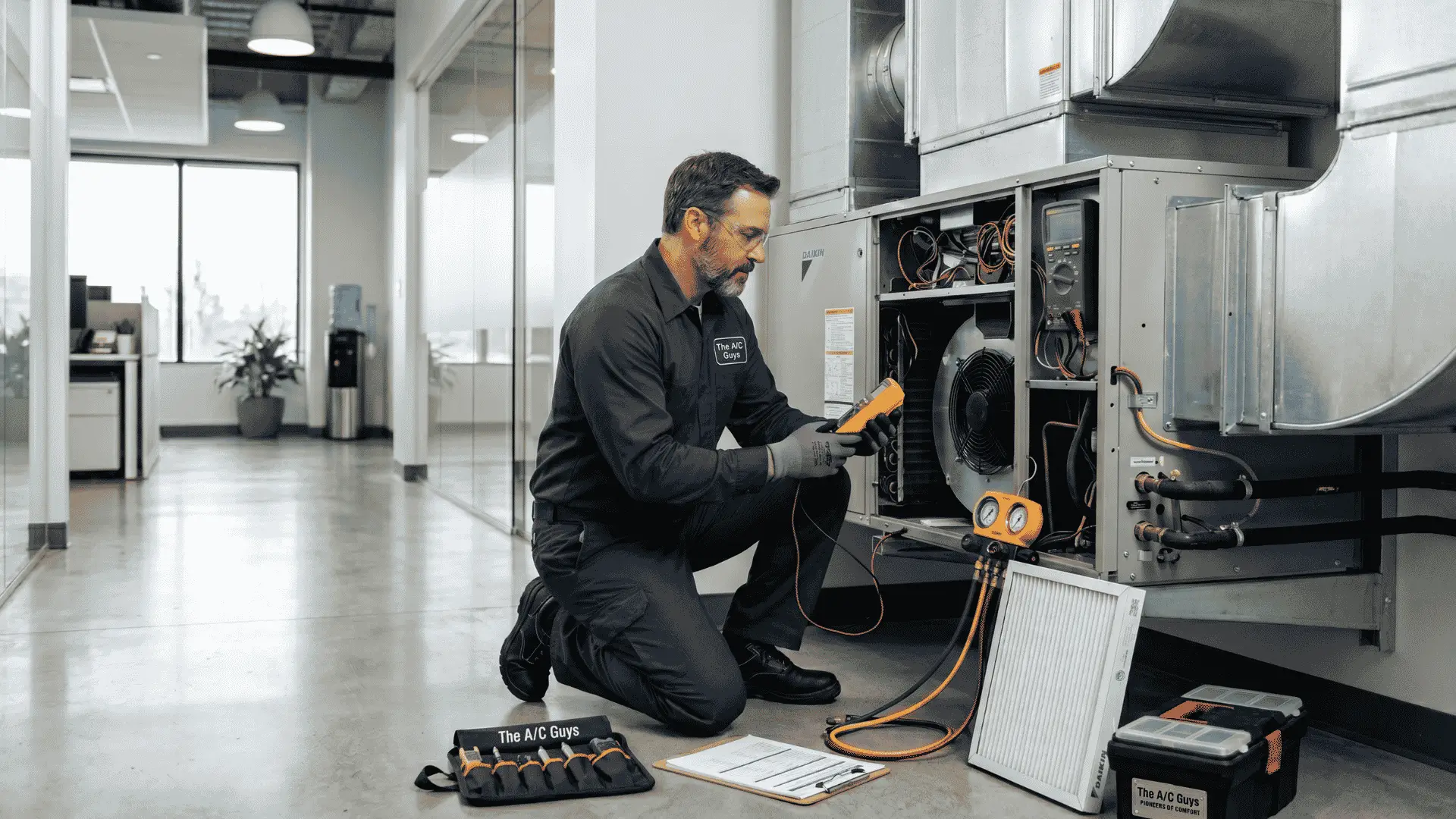


A commercial air conditioning system is a critical asset for any business. It maintains a comfortable indoor environment for employees and customers, protects temperature-sensitive equipment, and supports daily operations. When maintenance is overlooked, the system becomes less efficient, energy costs increase, and the likelihood of unexpected breakdowns rises significantly.
One of the most common questions business owners and facility managers ask is how often a commercial air conditioner should be serviced.
In general, a commercial air conditioning system should receive professional maintenance at least twice per year. However, the ideal service frequency depends on several factors, including system usage, building type, indoor air conditions, and local climate. In many commercial environments, quarterly maintenance is the most effective approach.
This article explains the recommended maintenance schedule for commercial air conditioners, the factors that influence service intervals, and why routine maintenance is essential for long-term system performance.
How Often Should a Commercial Air Conditioner Be Serviced?
For most commercial properties, professional air conditioning maintenance should be scheduled every six months.
A standard preventive maintenance schedule typically includes:
- One inspection and tune-up in the spring before the cooling season begins
- One inspection in the fall, especially if the HVAC system includes heating components
This schedule is suitable for office buildings, small warehouses, and other facilities with moderate cooling demands.
For businesses where the air conditioning system operates for extended hours or under demanding conditions, maintenance should be performed every three months.
Recommended Service Frequency by Facility Type
| Facility Type | Recommended Service Frequency |
|---|---|
| Office buildings | Every 6 months |
| Retail stores | Every 3 to 4 months |
| Restaurants | Every 3 months |
| Medical facilities | Every 3 months |
| Gyms and fitness centers | Every 3 months |
| Warehouses | Every 6 months |
| Data centers | Monthly inspections and quarterly maintenance |
The appropriate maintenance interval should be based on the operational demands placed on the system rather than a fixed schedule alone.
Recommended Maintenance Schedule for Different Types of Businesses
Different commercial environments place different levels of stress on HVAC equipment. Understanding how your business operates can help determine the most suitable service frequency.
- Office Buildings: Office HVAC systems generally operate during regular business hours and are exposed to relatively clean indoor conditions. In most cases, two maintenance visits per year are sufficient to maintain efficiency and reliability.
- Retail Stores: Retail spaces experience fluctuating occupancy levels and frequent door openings, which increase cooling demands. Quarterly service helps ensure consistent comfort and efficient operation.
- Restaurants: Restaurants create one of the most demanding environments for HVAC systems. Heat, grease, humidity, and airborne particles can quickly affect filters and coils. Service every three months is strongly recommended.
- Medical and Healthcare Facilities: Medical offices and clinics require stable indoor temperatures and good air quality. More frequent maintenance helps ensure dependable operation and supports a clean environment.
- Warehouses and Industrial Facilities: Warehouses may have lower cooling requirements, but dust and large open areas can impact performance. Semiannual maintenance is appropriate for most facilities.
- Data Centers and Server Rooms: Cooling systems in data centers operate continuously and protect critical equipment. Monthly inspections and proactive maintenance are essential to minimize downtime and equipment risk.
Why Regular Commercial AC Maintenance Is Important
Preventive maintenance is a cost-effective strategy that helps protect your HVAC investment and avoid operational disruptions.
- Improved Energy Efficiency: As dirt accumulates on filters and coils, the system must work harder to deliver the same level of cooling. Regular cleaning and adjustment help restore efficiency and reduce electricity consumption.
- Reduced Repair Costs: Routine inspections allow technicians to identify worn components and developing issues before they lead to major failures.
- Longer Equipment Life: Commercial HVAC systems represent a significant capital investment. Proper maintenance reduces wear and extends the useful life of the equipment.
- Consistent Indoor Comfort: Regular service helps maintain stable temperatures, proper airflow, and humidity control throughout the building.
- Better Indoor Air Quality: Clean filters and coils reduce the circulation of dust, allergens, and contaminants.
- Warranty Compliance: Many manufacturers require documented maintenance as a condition of warranty coverage.
Also check: How Often to Replace Your HVAC Air Filter
Signs Your Commercial Air Conditioner Needs Service
Even with a preventive maintenance schedule in place, certain warning signs indicate that the system should be inspected promptly.
- Increasing Utility Bills: A sudden rise in operating costs may indicate reduced efficiency caused by dirty components or mechanical issues.
- Uneven Cooling: Inconsistent temperatures across different areas of the building often signal airflow restrictions or system imbalances.
- Weak Airflow: Reduced airflow may be caused by clogged filters, fan problems, or duct issues.
- Unusual Noises: Grinding, buzzing, squealing, or rattling sounds should be addressed immediately to prevent further damage.
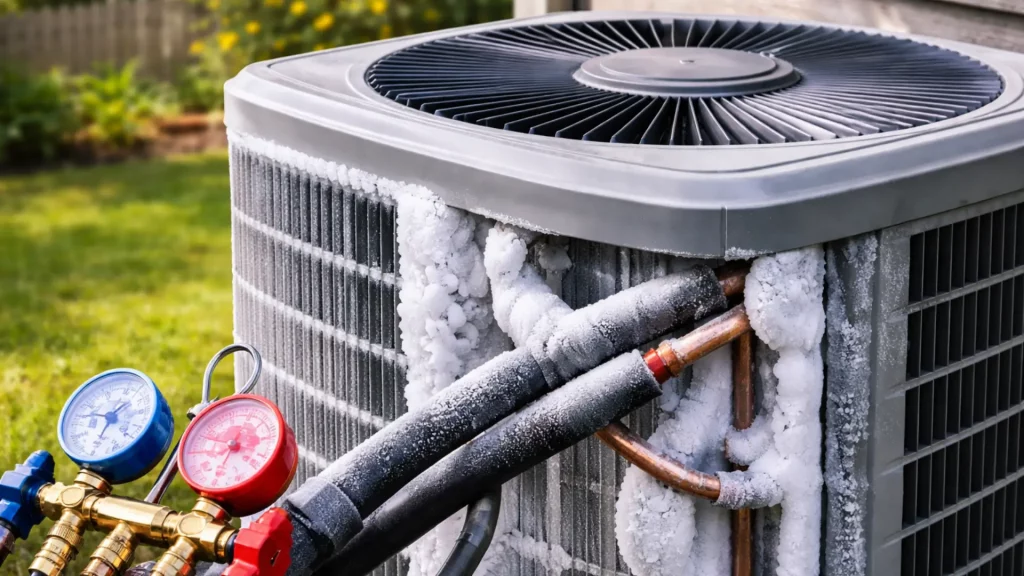
- Water Around the Unit: Water leaks can result from blocked condensate drains or damaged components.
- Frequent Cycling: If the system starts and stops more often than normal, it may be experiencing thermostat, airflow, or refrigerant problems.
What Is Included in a Commercial AC Maintenance Visit?
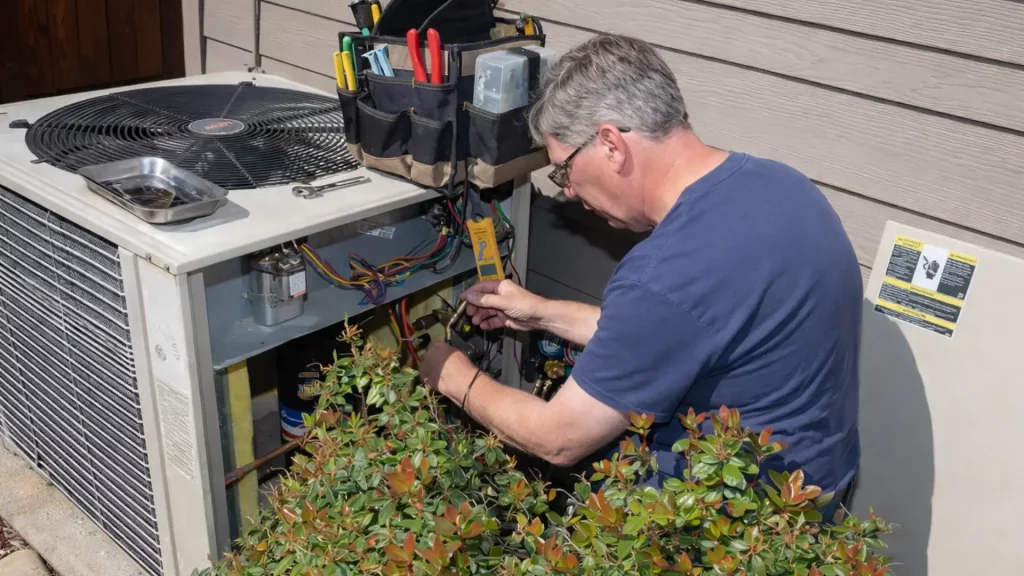
A professional maintenance visit includes a comprehensive inspection, cleaning, and performance evaluation of the system.
Typical maintenance tasks include:
- Replacing or cleaning air filters
- Cleaning condenser and evaporator coils
- Checking refrigerant pressure and levels
- Inspecting electrical connections and controls
- Testing capacitors and contactors
- Lubricating motors and bearings where applicable
- Inspecting belts, pulleys, and fan assemblies
- Cleaning condensate drain lines and pans
- Calibrating thermostats and control systems
- Measuring airflow and operating performance
At the end of the visit, the technician may provide recommendations for repairs or future equipment planning.
Factors That Affect How Often Your System Needs Service
Several factors influence how frequently a commercial air conditioner should be maintained.
- Climate Conditions: In regions with long cooling seasons and high temperatures, HVAC systems operate more often and require additional maintenance.
- Operating Hours: Facilities that run extended hours or continuously place greater stress on HVAC equipment.
- Indoor Air Quality Conditions: Dust, grease, humidity, and chemical exposure can accelerate filter and coil contamination.
- System Age: Older systems often require more frequent inspections and adjustments.
- Equipment Complexity: Large or multi-zone systems contain more components that need regular attention.
Risks of Skipping Commercial AC Maintenance
Postponing maintenance may reduce short-term costs, but it often leads to higher expenses over time.
Common consequences include:
- Higher energy consumption
- Unexpected equipment failures
- Increased repair costs
- Reduced equipment lifespan
- Inconsistent indoor comfort
- Poor air quality
- Loss of manufacturer warranty protection
For businesses that depend on reliable climate control, a single breakdown can disrupt operations and affect customer satisfaction.
Preventive Maintenance Plans for Commercial HVAC Systems
Many businesses choose scheduled maintenance agreements to ensure service is performed consistently.
These plans typically include:
- Routine inspections at predetermined intervals
- Priority scheduling for repairs
- Reduced pricing on parts and labor
- Detailed maintenance documentation
- Recommendations to improve efficiency and reliability
A maintenance agreement simplifies HVAC management and helps reduce the risk of costly emergency repairs.
Final Thoughts
Commercial air conditioners should be professionally serviced at least twice per year. For facilities with demanding operating conditions, quarterly maintenance provides better protection and more consistent performance.
Routine maintenance improves energy efficiency, extends equipment life, and reduces the likelihood of unexpected breakdowns. It also helps maintain a comfortable indoor environment and protects the substantial investment your business has made in its HVAC system.
If your commercial air conditioner has not been inspected within the past six months, scheduling a professional maintenance visit is a practical step toward preserving system reliability and controlling operating costs.
Frequently Asked Questions
Is servicing twice a year sufficient for most commercial HVAC systems?
Yes. Semiannual maintenance is appropriate for many office buildings and facilities with moderate usage. Systems operating under heavier demands often benefit from quarterly service.
How often should commercial air filters be replaced?
Filters should generally be inspected monthly and replaced every one to three months, depending on occupancy levels and indoor air conditions.
How long does a commercial AC maintenance visit take?
The duration depends on system size and complexity, but most visits take between one and three hours.
Does preventive maintenance lower energy costs?
Yes. Clean and properly adjusted equipment operates more efficiently and consumes less electricity.
Can regular maintenance prevent all breakdowns?
No maintenance program can eliminate every failure, but routine service significantly reduces the likelihood of unexpected and costly problems.