





Introduction: Why Indoor Humidity Matters More Than You Think
Ever noticed dry skin, scratchy throats, or static electricity during winter? Or sticky, musty air in summer? These aren’t minor annoyances — they are clear signs that your home’s humidity is off balance.
Humidity affects:
- Your health (allergies, asthma, respiratory comfort)
- Your home (wood warping, mold growth, paint damage)
- Your energy bills (HVAC efficiency drops when humidity is wrong)
This guide will help you understand ideal, high, and low humidity, how to measure it accurately, and what practical steps you can take room-wise and season-wise to fix it.
Humidity Basics: Understanding the Air You Breathe
Humidity is water vapor in the air, and it comes in two types:
- Relative Humidity (RH): Percentage of moisture in the air relative to the max it can hold at that temperature
- Absolute Humidity: Actual mass of water vapor in the air
Impact on your home:
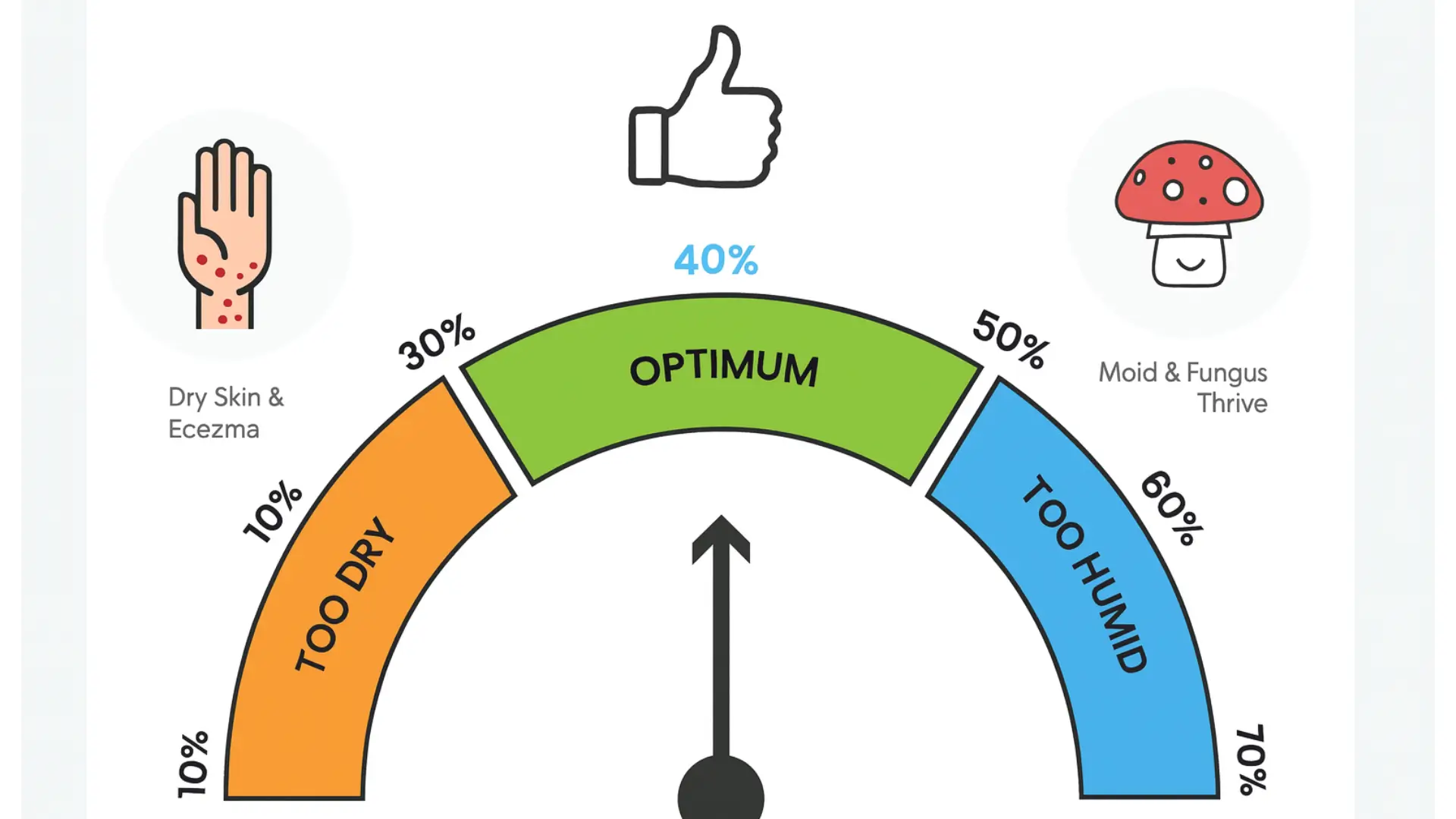
- High humidity → mold, dust mites, sticky rooms
- Low humidity → dry skin, cracked wood, respiratory discomfort
Even your HVAC system struggles if humidity isn’t balanced, increasing energy bills and maintenance needs.
Ideal Humidity Levels for Your Home
Experts like EPA and ASHRAE recommend 30–50% RH indoors.
- Bedrooms: 40–50% for comfort and better sleep
- Living Areas: 35–50% for balanced air quality
- Basements/Bathrooms: 30–50%, depending on ventilation
Seasonal adjustments:
- Winter: 30–40% to avoid condensation
- Summer: 40–50% to prevent mold
Pro tip: Use a hygrometer in each room — bathrooms, basements, and bedrooms are the most critical. Maintaining the right humidity level isn’t just about comfort. You can learn the complete humidity range recommendations in our article on the ideal humidity level in home.
Signs Your Humidity Is Too High or Too Low
High Humidity Symptoms:
- Musty odors or mold on walls
- Condensation on windows
- Sticky surfaces, damp furniture
- HVAC working harder
Low Humidity Symptoms:
- Dry, itchy skin and chapped lips
- Nosebleeds or scratchy throats
- Cracks in wooden floors/furniture
- Static electricity
Example: In Las Vegas winters, indoor RH can drop below 25%, causing dry skin, static shocks, and wooden furniture shrinking.
Common Causes of Humidity Imbalance
- Seasonal/weather changes: Cold winters dry the air; humid summers increase moisture
- Household habits: Drying clothes indoors, long showers, cooking without ventilation
- Structural issues: Leaks, poor insulation, foundation cracks
- HVAC limitations: Older systems may over-dry or fail to remove excess moisture
How to Measure Humidity Accurately
- Hygrometers: Place mid-room, away from vents/windows
- Smart thermostats/HVAC sensors: Real-time monitoring
- DIY test: Ice cube on window — condensation forms quickly? Humidity is high
Note: Visual clues aren’t enough; always verify with instruments
Why Proper Humidity Is Crucial
- Health: Reduces allergies, asthma triggers, respiratory discomfort
- Home Protection: Prevents mold, wood warping, paint peeling, electronic damage
- Energy Efficiency: Balanced humidity allows HVAC systems to work optimally, lowering bills
Example: Proper winter RH makes indoor air feel warmer, saving 5–10% on heating bills. If humidity levels are not balanced, dust and allergens become more active indoors. To understand how the right HVAC filters can reduce allergy triggers, you can read our guide on the best HVAC filters for allergies.
Fixing High Humidity
- Quick fixes: Open windows (if outside air is dry), use exhaust fans, run dehumidifiers
- Long-term solutions: Upgrade HVAC with humidity control, improve insulation, seal leaks
- Room-specific tip: Basements and bathrooms need extra attention — dehumidifiers prevent mold and musty odors
Fixing Low Humidity
- Humidifiers: Portable or whole-home, target 40–45% RH
- Natural methods: Indoor plants, bowls of water near heaters, steam from showers
- Winter strategies: Moderate heating to prevent over-drying, reduce drafts
Example: Using a bedroom humidifier in dry desert winters improves sleep quality and prevents dry throat and skin. Too much or too little humidity changes how dust moves inside your home. Learn more about dust sources and prevention in our article titled where is all this dust coming from.
Tools & Devices for Humidity Control
- Humidifiers & dehumidifiers — choose based on room size and RH reading
- Air purifiers with humidity functions
- Smart home devices — automated alerts and adjustments
Seasonal Humidity Guide
- Winter: 30–40% RH — use humidifiers in bedrooms
- Summer: 40–50% RH — dehumidifiers may be needed
- Wet seasons/monsoon: Monitor closely to prevent mold growth
- Room-specific advice: Bathrooms, kitchens → ventilate; Bedrooms → portable humidifiers; Basements → seal leaks + dehumidifiers
When to Call a Professional
- Persistent mold or condensation
- HVAC unable to maintain ideal RH
- Structural leaks causing moisture damage
- Professional assessment ensures long-term protection and comfort
Summary & Actionable Takeaways
Keeping your indoor humidity in the 30% to 50% range creates a healthier, more comfortable living environment. When the air becomes too dry, adding a little moisture can prevent irritation and protect your home. When humidity gets too high, reducing excess moisture helps avoid mold, odors, and strain on your HVAC system. Regular monitoring and small seasonal adjustments are all it takes to maintain balance and prevent long-term problems.


