



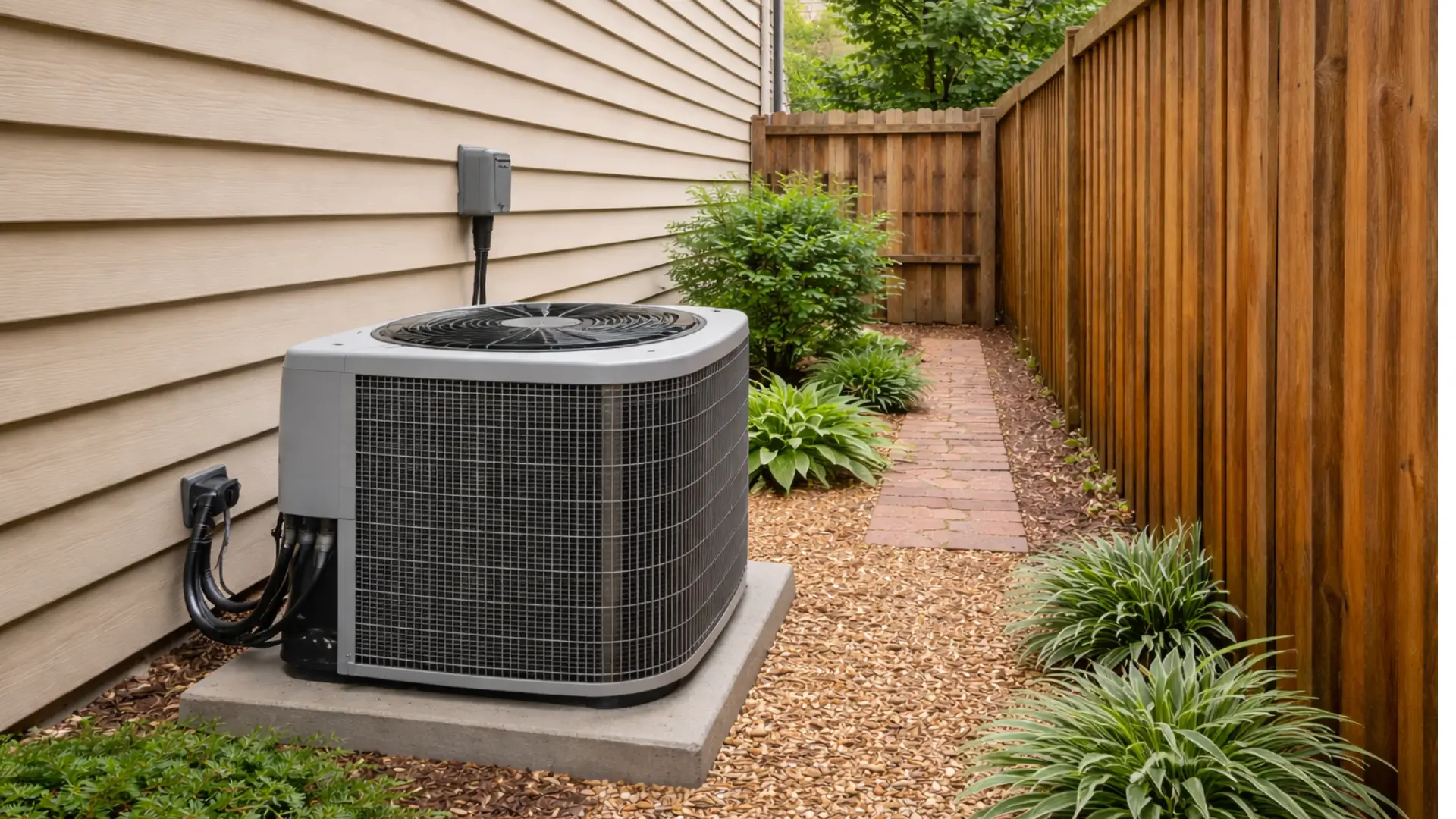


A side yard air conditioner refers to a standard outdoor AC unit (also called a condenser) that is installed in the narrow space along the side of a home, between the exterior wall and the property boundary. It is not a special type of air conditioner. In most cases, it is the same central AC or heat pump you would see in any home, simply placed in a different location.
Homes typically have three possible spots for the outdoor unit: front yard, backyard, or side yard. Builders and HVAC installers often choose the side yard because it keeps the equipment out of sight while still providing a practical place for operation and maintenance.
For many homeowners, the side yard is unused space, so placing mechanical equipment there makes efficient use of the property without affecting outdoor living areas.
How a Side Yard AC Unit Works
A side yard installation does not change how the system functions. A central air conditioning system always has two main components:
- An indoor unit that absorbs heat from inside the home
- An outdoor condenser that releases that heat outside
The outdoor unit pulls in outside air, transfers heat from the refrigerant, and expels warm air through the fan on top. As long as the unit has enough open space for airflow, it will operate normally regardless of whether it sits in the backyard or the side yard.
Why AC Units Are Commonly Installed in Side Yards
In residential construction, side yard placement is often the most practical option. Several factors influence this decision.
1. Efficient Use of Space
Side yards are rarely used for recreation or landscaping. Installing the AC there preserves valuable backyard and front yard space for patios, gardens, or play areas.
2. Improved Curb Appeal
Many homeowners prefer not to see mechanical equipment from the street. A side yard location keeps the front of the home clean and visually appealing.
3. Reduced Noise in Living Areas
Outdoor AC units produce a constant humming sound when running. Placing the unit away from windows, bedrooms, or outdoor seating areas can make the noise far less noticeable.
4. Convenient Connection to Indoor Equipment
In many homes, the furnace or air handler is located near a side wall. Installing the condenser directly outside that wall shortens refrigerant lines and electrical runs, which can improve efficiency and reduce installation cost.
Also Read: Should you get a rooftop Air Conditioner or a side yard Air Conditioner?
Clearance Requirements for Proper Performance
Airflow is critical for an outdoor unit. When placed in a tight side yard, clearances become even more important. If hot air cannot escape, the system will struggle to cool your home and may overheat.
While exact requirements vary by manufacturer and local code, the following guidelines are commonly recommended:
| Clearance Area | Typical Minimum Space |
|---|---|
| From house wall | 12 to 24 inches |
| From fence or obstruction | 24 inches or more |
| Above the unit | 5 feet or clear open air |
| Service access side | Enough space for a technician to work |
Always follow the specifications listed for the specific unit model. Installing too close to walls or fences can shorten equipment life and increase energy consumption.
Potential Drawbacks of Side Yard Placement
Although side yard installation is common, it is not ideal for every home. Certain conditions can create problems over time.
One issue is restricted airflow. Narrow passages can trap hot air, especially if fences, shrubs, or storage items surround the unit. This forces the system to work harder and may reduce cooling capacity.
Maintenance access is another concern. Technicians need room to remove panels, test components, and perform repairs. Extremely tight spaces can increase service time and cost.
Noise can also behave differently in confined areas. Sound waves may bounce between walls and fences, making the unit seem louder than it would in an open yard.
In some neighborhoods, property line rules or homeowners association guidelines restrict how close equipment can be placed to adjacent properties. Failing to follow these rules can lead to compliance issues.
Tips to Improve Performance in a Side Yard Installation
If your AC unit is located on the side of your home, a few simple practices can help it run efficiently and last longer.
Keep the area clear of obstacles. Avoid storing bins, tools, or furniture near the unit. Trim plants regularly so they do not block airflow.
Ensure proper drainage. Water from rain or condensation should flow away from the equipment to prevent rust and foundation issues.
Consider sound management if noise is a concern. Installing an acoustic fence panel or landscaping barrier can reduce sound without blocking airflow when done correctly.
Schedule regular professional maintenance. Side yard units can collect dust, leaves, and debris more easily, so routine cleaning is important.
Is a Side Yard Air Conditioner Right for Your Home?
A side yard location works well when the space provides adequate airflow, accessibility, and compliance with local regulations. For many homes, it offers the best balance between functionality and appearance.
However, every property is different. The ideal placement depends on home layout, lot size, indoor equipment location, and neighborhood requirements. A professional HVAC assessment can determine the most efficient and code compliant position for the outdoor unit.


