



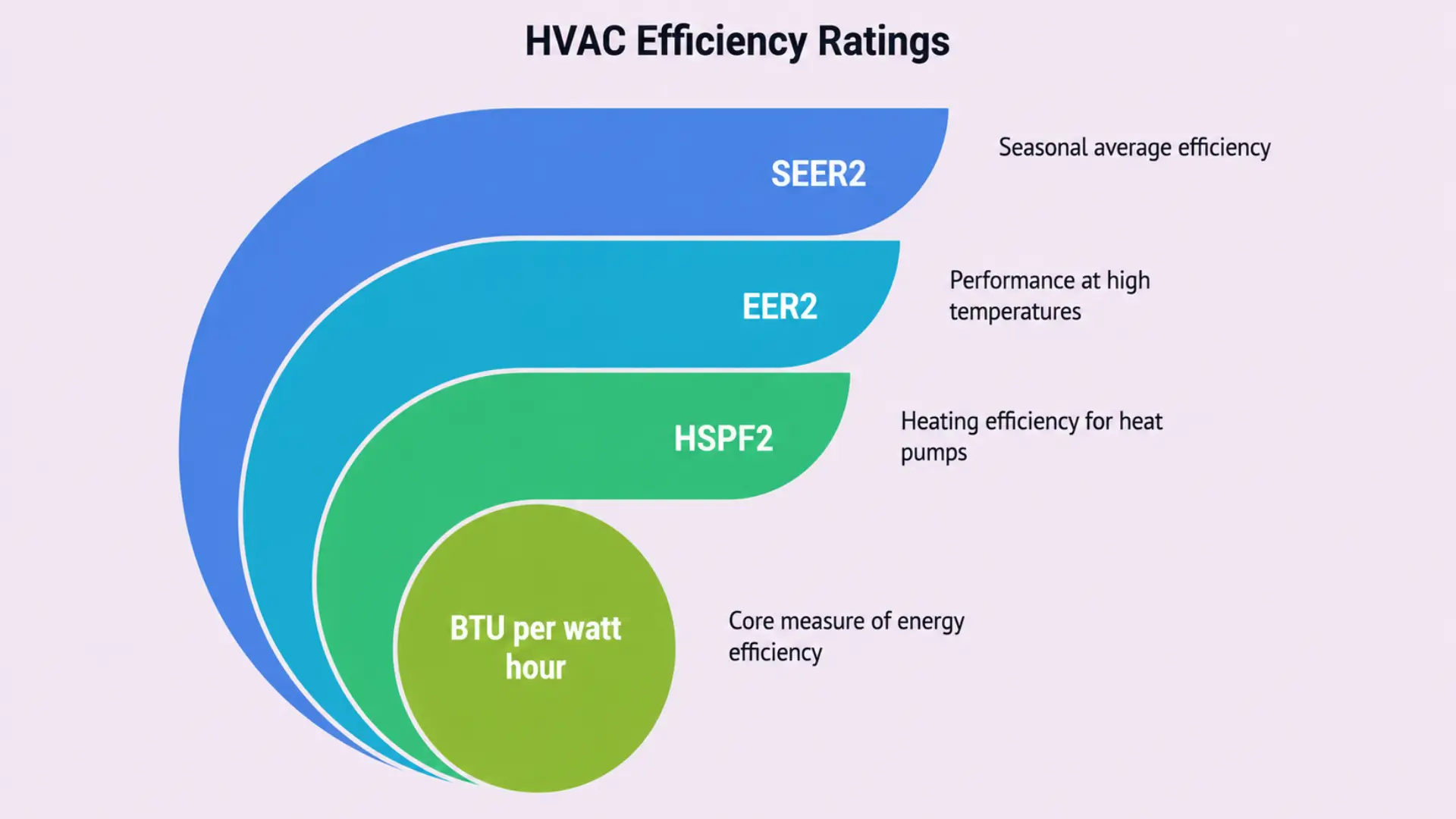


When comparing air conditioning systems, one of the first specifications you’ll notice is the SEER2 rating. Manufacturers often promote higher SEER2 numbers as a way to lower energy bills, but many homeowners are unsure how much those ratings actually affect cooling costs.
The answer is simple: SEER2 ratings directly influence how much electricity an HVAC system uses to cool your home. A higher SEER2 rating means the system can produce the same amount of cooling while consuming less energy. Over time, this can reduce monthly utility bills and lower the overall cost of operating your HVAC system.
However, SEER2 is only one part of the equation. Climate, electricity rates, insulation quality, and system sizing also play major roles in determining your actual cooling expenses. Understanding how these factors work together can help you choose an HVAC system that delivers the best balance of efficiency and value.
What Is a SEER2 Rating?
SEER2 stands for Seasonal Energy Efficiency Ratio 2. It is the current industry standard used to measure the cooling efficiency of residential air conditioners and heat pumps.
The rating reflects how efficiently a system converts electricity into cooling over an entire cooling season. In general, the higher the SEER2 rating, the more efficiently the equipment operates.
For homeowners, this means a system with a higher SEER2 rating can often provide the same indoor comfort while using less electricity than a lower-rated unit. If you’re new to HVAC efficiency measurements, understanding SEER and SEER2 ratings can provide additional context on how modern cooling systems are evaluated.
How SEER2 Measures Cooling Efficiency
SEER2 evaluates HVAC performance under testing procedures designed to better reflect real-world operating conditions. Rather than measuring performance at a single point, the rating considers efficiency across a range of conditions commonly experienced during a cooling season.
This approach provides a more realistic representation of how a system may perform in everyday use.
SEER vs. SEER2: What’s Changed?
Before 2023, HVAC equipment was rated using the SEER standard. The industry transitioned to SEER2 to create more accurate efficiency measurements that better reflect actual installation conditions.
Because SEER2 testing is more rigorous, equivalent ratings often appear slightly lower than older SEER ratings even when the equipment performance is similar.
| Previous SEER Rating | Approximate SEER2 Equivalent |
|---|---|
| 14 SEER | 13.4 SEER2 |
| 15 SEER | 14.3 SEER2 |
| 16 SEER | 15.2 SEER2 |
| 18 SEER | 17.2 SEER2 |
This change helps homeowners make more informed comparisons when evaluating modern HVAC systems. Homeowners comparing different efficiency standards may also benefit from learning about EER vs. SEER vs. CEER efficiency ratings and how each metric measures energy performance.
How SEER2 Ratings Affect Energy Consumption
The relationship between SEER2 ratings and energy use is straightforward. Higher efficiency systems require less electricity to deliver the same cooling output.
If two air conditioners cool the same home under identical conditions, the unit with the higher SEER2 rating will typically consume fewer kilowatt-hours of electricity throughout the cooling season.
As a result, homeowners often see lower utility bills when upgrading to higher-efficiency equipment.
Why Higher Efficiency Systems Use Less Electricity
Modern high-efficiency systems incorporate advanced technologies that improve performance while reducing energy consumption.
These may include:
-
Variable-speed compressors
-
Multi-stage cooling operation
-
High-efficiency blower motors
-
Enhanced coil designs
-
Advanced refrigerant management systems
-
Smart controls and sensors
Unlike older single-stage systems that operate at full capacity whenever they turn on, many higher-SEER2 units can adjust output based on cooling demand. This allows the system to run more efficiently while maintaining consistent indoor temperatures.
Understanding Energy Usage Over a Cooling Season
Cooling costs are influenced by three primary factors:
-
How much cooling your home requires
-
How often the system operates
-
The efficiency of the equipment
Homes located in hotter regions typically require more cooling hours throughout the year. Because the air conditioner runs more frequently, efficiency improvements have a greater impact on annual energy consumption.
This is one reason homeowners in warmer climates often benefit the most from higher-SEER2 systems.
How Much Can a Higher SEER2 Rating Save You?
One of the biggest reasons homeowners choose higher-efficiency equipment is the potential for long-term energy savings.
Although exact savings vary from one household to another, higher SEER2 ratings generally result in lower cooling costs because the system consumes less electricity.
For homeowners replacing older HVAC equipment, the reduction in energy usage can be significant, particularly if the existing system is more than a decade old.
Comparing Operating Costs Across Common SEER2 Ratings
The following table illustrates the general relationship between efficiency and operating costs:
| SEER2 Rating | Efficiency Level | Relative Cooling Costs |
|---|---|---|
| 13.4 SEER2 | Standard Efficiency | Highest |
| 15.2 SEER2 | Mid-Level Efficiency | Lower |
| 16-18 SEER2 | High Efficiency | Significantly Lower |
| 20+ SEER2 | Premium Efficiency | Lowest |
As efficiency increases, operating costs generally decrease. Reviewing different air conditioner SEER ratings can help homeowners better understand how efficiency levels affect long-term operating expenses.
Example Energy Cost Scenarios
Imagine two homeowners with similar homes and cooling needs.
One installs a 13.4 SEER2 system, while the other chooses a 16 SEER2 model.
Because the 16 SEER2 system requires less electricity to produce the same amount of cooling, annual energy consumption may be reduced by approximately 15% to 20%, depending on operating conditions.
Over the lifespan of the equipment, these savings can add up substantially, particularly in areas with long cooling seasons and high electricity rates.
SEER2 Rating Comparison: 13.4 vs. 15.2 vs. 18+ SEER2
Choosing the right SEER2 rating involves balancing upfront cost with long-term energy savings.
13.4 SEER2 Systems
These systems typically represent the minimum efficiency level available in many regions.
Advantages:
-
Lower purchase price
-
Lower installation costs
-
Suitable for limited cooling needs
Considerations:
-
Higher monthly operating expenses
-
Less efficient than modern mid-range systems
15.2 SEER2 Systems
Many homeowners find this range offers the best balance between cost and efficiency.
Advantages:
-
Improved energy savings
-
Reasonable upfront investment
-
Strong return on investment
Considerations:
-
Higher initial cost than entry-level systems
18+ SEER2 Systems
These premium systems are designed for maximum efficiency and comfort.
Advantages:
-
Lowest energy consumption
-
Better humidity control
-
Enhanced comfort performance
-
Reduced long-term operating costs
Considerations:
-
Higher equipment and installation costs
-
Longer payback period in mild climates
Factors That Influence Your Actual Cooling Costs
While SEER2 ratings matter, they are only one piece of the puzzle. Several additional factors can significantly affect how much you spend on cooling.
1. Local Electricity Rates
Homes located in areas with higher utility costs generally see greater financial benefits from energy-efficient HVAC systems. The more expensive electricity becomes, the more valuable each kilowatt-hour saved will be.
2. Climate and Cooling Demand
A homeowner in a hot southern climate will typically run an air conditioner much more frequently than someone living in a cooler region. More operating hours create greater opportunities for energy savings.
3. Home Insulation and Air Leakage
Poor insulation and air leaks force HVAC systems to work harder to maintain indoor temperatures, which is why addressing heat loss in your home can help improve overall HVAC efficiency.. Even a high-SEER2 system can experience reduced efficiency if conditioned air continuously escapes from the home.
4. Thermostat Settings
Lower thermostat settings increase cooling demand and energy consumption. Maintaining reasonable temperature settings can help reduce utility costs regardless of system efficiency, especially when following recommendations for the best thermostat setting for summer.
For additional energy savings, homeowners may also want to compare a smart thermostat vs programmable thermostat to determine which option best fits their cooling habits.
5. Proper System Sizing and Installation
An improperly sized HVAC system can waste energy and reduce comfort, making it important to understand what size AC unit do I need before investing in new equipment. Oversized systems may short cycle, while undersized systems may run continuously without adequately cooling the home. Professional system design and installation are essential for achieving the efficiency levels reflected in a unit’s SEER2 rating.
Is a Higher SEER2 Rating Worth the Upfront Cost?
Many homeowners wonder whether paying more for a higher-efficiency system is financially worthwhile.
The answer depends on how long you plan to stay in your home, how much you use your air conditioner, and local energy costs.
In hot climates where cooling systems operate for much of the year, upgrading to a higher SEER2 rating often provides meaningful long-term savings.
In milder climates, the energy savings may be smaller, making a mid-range efficiency system the better value. Homeowners planning an upgrade should also consider when is the best time to buy an HVAC system, as seasonal demand can influence overall project costs.
Initial Investment vs. Long-Term Savings
Higher-efficiency systems generally cost more because they incorporate advanced technologies and components.
However, those higher upfront costs may be partially offset through:
-
Lower monthly energy bills
-
Reduced lifetime operating costs
-
Potential utility rebates
-
Improved home value
Evaluating total ownership costs rather than purchase price alone provides a more accurate picture of long-term value.
When Upgrading Makes Financial Sense
A higher-SEER2 system often makes sense when:
-
Your current equipment is old and inefficient
-
You live in a hot climate
-
Electricity rates are high
-
You plan to stay in your home for many years
-
Comfort and humidity control are priorities
Situations Where Ultra-High SEER2 May Not Provide the Best Return
Premium systems do not always deliver the fastest return on investment.
If your cooling demand is relatively low, a mid-range efficiency system may offer a better balance between upfront cost and energy savings.
The goal should be finding the efficiency level that aligns with your climate, budget, and long-term plans.
Choosing the Right SEER2 Rating for Your Home
There is no universal SEER2 rating that works best for every homeowner. Once you’ve selected the right efficiency level, professional AC installation services help ensure your system delivers the performance and energy savings you expect.
The ideal choice depends on several factors.
- Budget Considerations: If minimizing upfront cost is the primary concern, a standard-efficiency system may be the most practical option. For homeowners willing to invest more initially, higher-efficiency equipment can reduce operating expenses over time.
- Climate Considerations: Hot climates generally justify higher SEER2 ratings because cooling systems operate more frequently. In moderate climates, mid-range efficiency systems often provide the best overall value.
- Expected System Usage: Households that rely heavily on air conditioning are more likely to recover the additional cost of a higher-efficiency system through energy savings. For seasonal or limited use, the benefits may be less dramatic.
Frequently Asked Questions
1. Does a higher SEER2 rating always lower utility bills?
In most cases, yes. Higher-SEER2 systems use less electricity to provide the same amount of cooling. However, actual savings depend on usage habits, climate, and electricity costs.
2. What is considered a good SEER2 rating?
For many homeowners, 15.2 to 17 SEER2 provides an effective balance between efficiency and affordability. The ideal rating depends on local conditions and budget.
3. How much more efficient is a 16 SEER2 unit than a 14 SEER2 unit?
Efficiency improvements vary by model, but a 16 SEER2 system can typically reduce energy consumption by approximately 10% to 20% compared to a lower-rated unit under similar operating conditions.
4. Can SEER2 ratings affect HVAC rebates and incentives?
Yes. Some utility companies and local programs offer incentives for installing higher-efficiency HVAC equipment that meets specific efficiency requirements.
5. Should I replace an older AC solely for a higher SEER2 rating?
Not always. The decision should consider the age, condition, repair history, and efficiency of the existing system. If the unit is nearing the end of its lifespan, upgrading may provide greater long-term value.
Final Thoughts
SEER2 ratings play a direct role in determining cooling costs because they measure how efficiently an HVAC system converts electricity into cooling. Higher ratings generally lead to lower energy consumption and reduced utility bills, particularly in regions with long cooling seasons.
However, efficiency ratings should never be viewed in isolation. Climate, electricity rates, insulation quality, thermostat settings, and installation quality all influence real-world operating costs.
For many homeowners, the best choice is not necessarily the highest SEER2 rating available but the system that delivers the right balance of efficiency, performance, and long-term value for their specific needs.