





Selecting the right thermostat is a practical decision that directly affects indoor comfort, energy efficiency, and long term operating costs. While both smart and programmable thermostats improve upon traditional manual controls, they serve different types of households and usage patterns.
This guide explains how each option works, where they differ, and how to choose the right solution for your home.
What Is a Programmable Thermostat?
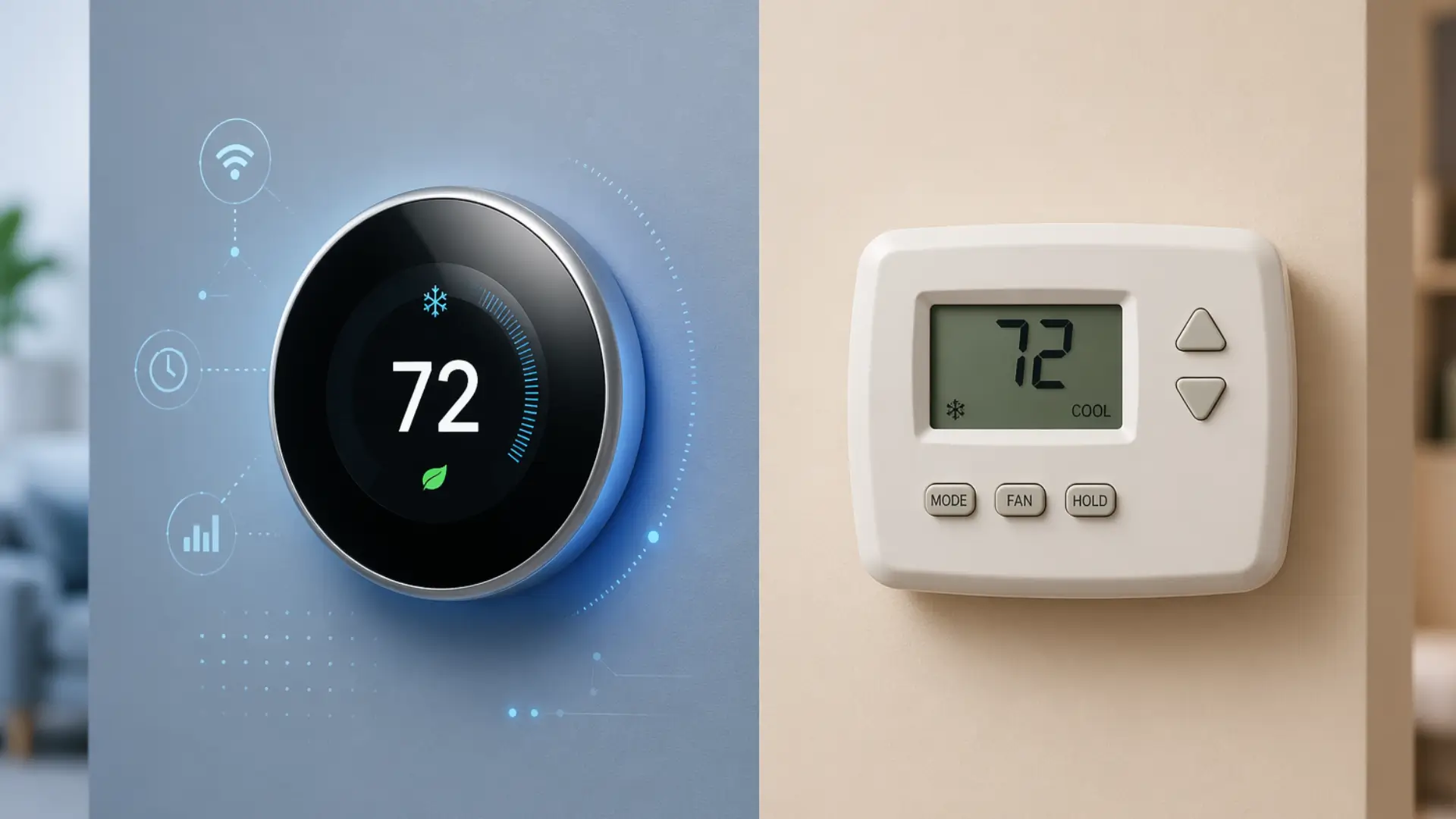
A programmable thermostat allows you to predefine temperature settings based on a fixed schedule. Most models support multiple daily periods such as morning, daytime, evening, and night, with separate configurations for weekdays and weekends.
This approach helps reduce energy use by automatically adjusting temperatures when the home is unoccupied or when occupants are asleep. For example, you can lower heating during working hours and restore comfort levels before returning home.
Programmable thermostats are most effective in households with stable, predictable routines.
What Is a Smart Thermostat?
A smart thermostat builds on programmable functionality by adding connectivity and automation. These devices connect to Wi Fi networks, allowing users to control settings remotely through mobile apps or web interfaces.
In addition to scheduling, many smart thermostats include:
- Real time remote access
- Learning capabilities based on user behavior
- Integration with voice assistants and smart home systems
- Energy usage insights and reports
- Occupancy detection
- Weather responsive adjustments
These features are designed to improve convenience while optimizing energy use with minimal manual input.
Also Read: Difference types of Smart Thermostats
Core Differences between Smart vs Programmable Thermostat
| Feature | Programmable Thermostat | Smart Thermostat |
|---|---|---|
| Scheduling | Manual setup | Manual and automated |
| Remote access | Not available | Available via app |
| Connectivity | No | Yes |
| Learning capability | No | Available in many models |
| Energy tracking | Limited | Detailed reporting |
| Initial cost | Lower | Higher |
| User control | Basic | Advanced |
Energy Efficiency Considerations
Both thermostat types can reduce unnecessary heating and cooling when used properly. The difference lies in how adjustments are managed.
A programmable thermostat relies entirely on pre set schedules. When configured correctly, it can deliver consistent energy savings. However, it does not respond to unexpected changes, such as early departures or late returns.
A smart thermostat adapts to real time conditions. It can detect occupancy, learn user preferences, and adjust settings automatically. This flexibility often results in more efficient operation in households with variable routines.
That said, actual savings depend on user behavior. A well configured programmable thermostat can outperform a smart device that is not used effectively.
Cost and Value
Programmable thermostats are typically more affordable, making them a practical choice for homeowners seeking a straightforward upgrade.
Smart thermostats involve a higher initial investment due to advanced features and connectivity. Additional considerations may include:
- Professional installation costs
- Compatibility upgrades
- Wiring requirements such as a C wire
While the upfront cost is higher, smart thermostats may offer better long term value through improved energy management and reduced manual adjustments.
Installation and Compatibility
Before selecting a thermostat, it is important to confirm compatibility with your HVAC system. Key factors include:
- System type such as central air, heat pump, or multi stage systems
- Existing wiring configuration
- Power requirements
Some smart thermostats require continuous power through a C wire, which may not be present in older homes. In such cases, installation may require additional work or professional assistance.
Usability and Control
Programmable thermostats provide reliable control once schedules are established. However, many users find the interface less intuitive, which can lead to underutilization of features.
Smart thermostats are generally easier to manage through mobile applications. They offer greater flexibility, allowing users to adjust settings instantly from any location. This is particularly useful for homeowners with dynamic schedules.
The choice here depends on whether you prefer simple, fixed controls or a more interactive and responsive system.
Choosing Based on Lifestyle
A Programmable Thermostat Is Suitable If:
- Your daily routine is consistent
- You prefer a lower upfront investment
- You want a simple, dependable solution
- You are comfortable setting and maintaining schedules manually
A Smart Thermostat Is Suitable If:
- Your schedule changes frequently
- You travel often or spend time away from home
- You want remote access and real time control
- You use or plan to use smart home technology
- You value automation and data driven insights
Common Considerations Before Buying
- Verify compatibility with your HVAC system
- Assess whether advanced features will be used regularly
- Consider installation requirements and potential upgrades
- Ensure proper placement for accurate temperature readings
Ignoring these factors can reduce the effectiveness of either option.
Also Read: Why Is Your Thermostat In Recovery Mode?
Final Recommendation
Both smart and programmable thermostats offer meaningful improvements over manual systems. The right choice depends less on the technology itself and more on how it aligns with your daily habits.
A programmable thermostat is a reliable, cost effective option for households with stable routines. It delivers consistent performance without unnecessary complexity.
A smart thermostat is better suited for households seeking flexibility, automation, and remote control. It offers greater adaptability, particularly where schedules are not fixed.
If you are uncertain about compatibility or installation requirements, consulting a qualified HVAC professional is a practical step. An informed decision at this stage can prevent performance issues and ensure you get the expected value from your investment.