



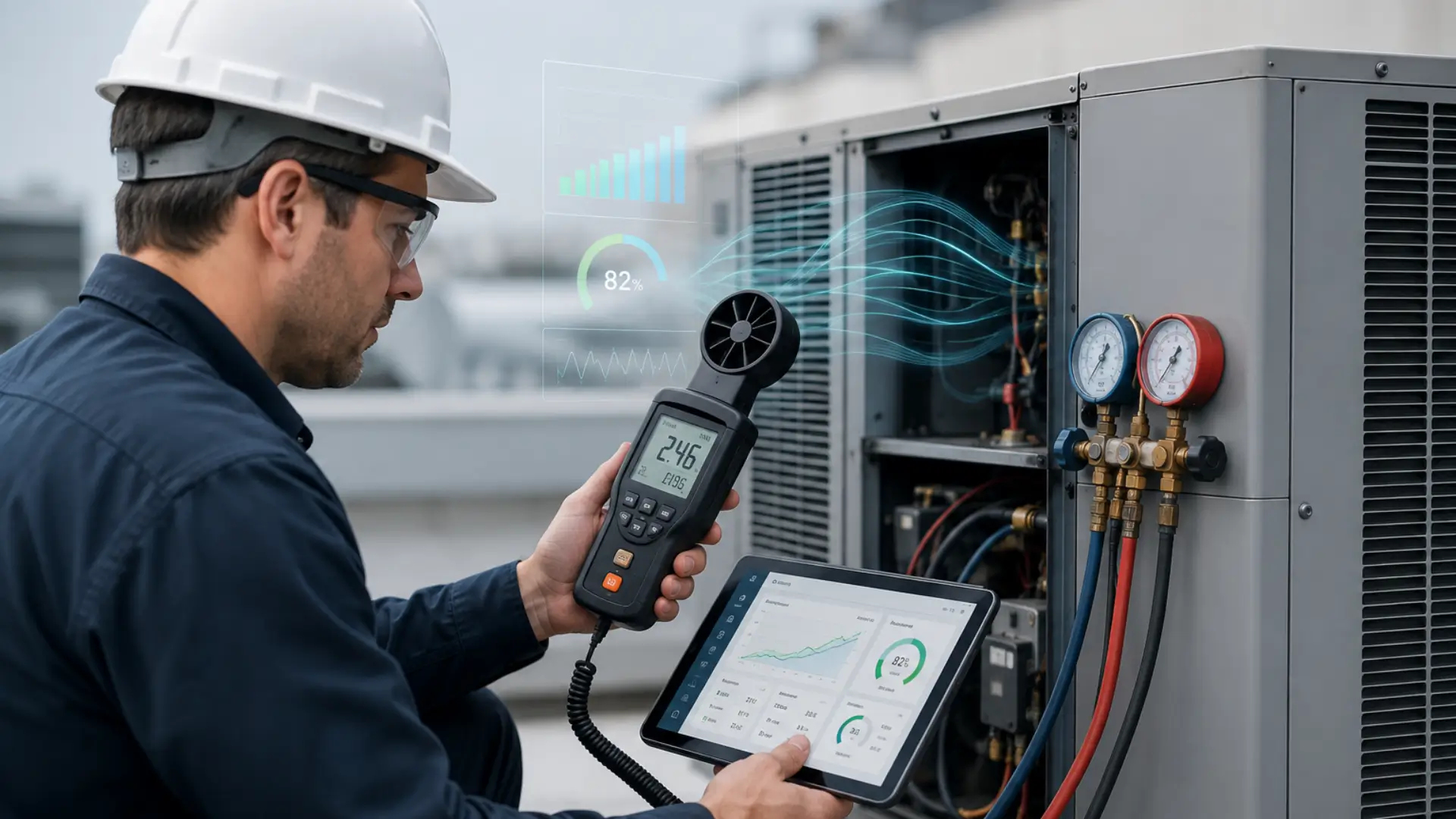


Heating, ventilation, and air conditioning systems are among the largest energy consumers in residential and commercial buildings. Even a professionally installed HVAC system can lose efficiency over time due to airflow restrictions, duct leakage, improper refrigerant charge, dirty components, or normal wear and tear.
HVAC performance testing helps identify these hidden issues before they lead to rising energy bills, uncomfortable indoor temperatures, reduced equipment lifespan, and costly breakdowns. Rather than relying on assumptions, performance testing provides measurable data that shows how effectively a heating and cooling system is operating.
For homeowners and businesses in Las Vegas and Pahrump, where HVAC systems often run for extended periods during extreme summer temperatures, regular performance testing can play a significant role in maintaining comfort, lowering utility costs, and protecting equipment investments.
What Is HVAC Performance Testing?
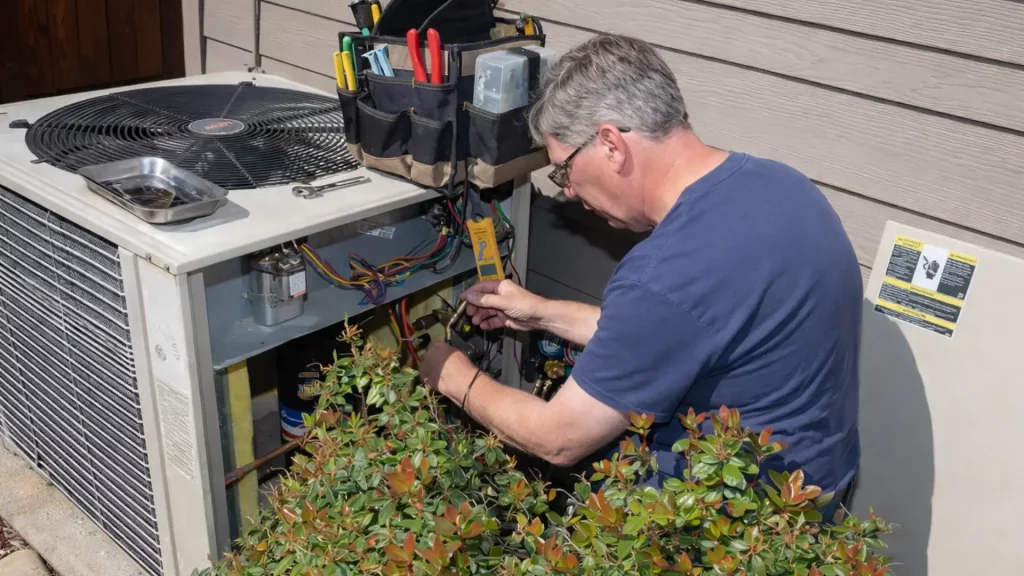
HVAC performance testing is a comprehensive diagnostic process used to evaluate how well a heating and cooling system operates under real-world conditions. Technicians use specialized instruments to measure airflow, temperature, static pressure, refrigerant performance, electrical consumption, and overall system efficiency.
The objective is to determine whether the system is delivering the proper amount of conditioned air while operating safely, efficiently, and according to manufacturer specifications.
Unlike a standard HVAC tune-up, performance testing focuses on measurable system performance rather than simply inspecting or cleaning components.
Why HVAC Performance Testing Matters
Many HVAC systems appear to be operating normally while functioning significantly below their intended efficiency levels.
Performance testing helps uncover hidden problems such as:
- Restricted airflow
- Dirty evaporator or condenser coils
- Duct leakage
- Improper refrigerant charge
- Incorrect equipment sizing
- Thermostat calibration issues
- Excessive static pressure
- Electrical inefficiencies
Addressing these issues can provide several benefits:
- Lower energy consumption
- Improved indoor comfort
- More consistent temperatures
- Better humidity control
- Reduced equipment wear
- Longer system lifespan
- Fewer emergency repairs
- Lower operating costs
For commercial facilities, HVAC performance testing can also support energy management initiatives, sustainability goals, and operational efficiency programs.
How HVAC Performance Testing Is Performed
A professional HVAC performance evaluation typically follows a structured testing process.
1. Airflow Testing
Technicians measure airflow throughout the system to verify proper air delivery.
A commonly accepted benchmark for many residential cooling systems is approximately 400 CFM (cubic feet per minute) per ton of cooling capacity. Low airflow can reduce efficiency, decrease comfort, and place unnecessary strain on equipment.
2. Static Pressure Testing
Static pressure testing measures resistance to airflow within the duct system. Excessive Total External Static Pressure (TESP) often indicates:
- Dirty air filters
- Undersized ductwork
- Closed dampers
- Airflow restrictions
- Dirty coils
High static pressure forces HVAC equipment to work harder and may significantly increase energy consumption.
3. Temperature Differential (Delta T) Testing
Temperature differential, commonly known as Delta T, measures the difference between supply-air and return-air temperatures.
Abnormal temperature differences may indicate:
- Refrigerant problems
- Airflow restrictions
- Dirty coils
- Mechanical issues
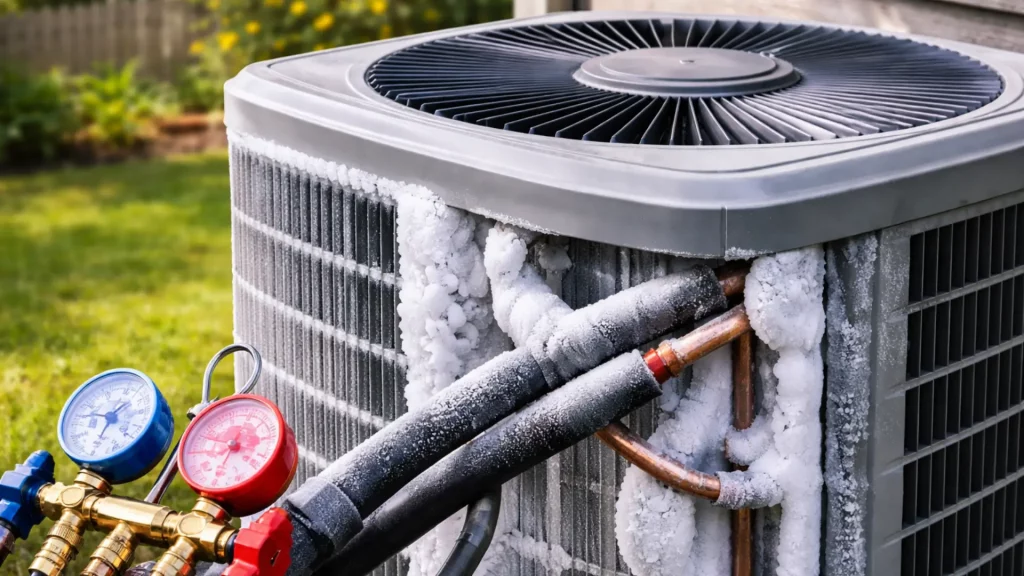
4. Refrigerant Performance Analysis
Proper refrigerant charge is critical to system efficiency. Technicians evaluate:
- Refrigerant pressures
- Superheat
- Subcooling
- Operating temperatures
Improper refrigerant levels can reduce cooling capacity, increase energy use, and shorten compressor life.
5. Electrical Performance Testing
Electrical diagnostics help ensure components operate within manufacturer specifications.
Measurements often include:
- Voltage
- Amperage
- Power consumption
- Capacitor performance
- Motor operation
6. Duct Leakage Testing
Leaky duct systems can waste conditioned air before it reaches occupied spaces. Because air ducts play a critical role in HVAC airflow and efficiency, identifying and sealing leaks is often one of the most effective performance improvements.
Duct leakage testing helps identify:
- Air losses
- Poorly sealed connections
- Energy waste
- Comfort issues
Key HVAC Performance Benchmarks
While specifications vary by equipment type and manufacturer, technicians commonly evaluate:
| Performance Metric | Typical Target |
| Airflow | Approximately 400 CFM per ton |
| Static Pressure | Manufacturer-specific limits |
| Delta T | Typically 16°F–22°F for cooling systems |
| Refrigerant Charge | Manufacturer specifications |
| Electrical Draw | Within equipment ratings |
Performance testing compares actual results against these benchmarks to identify opportunities for improvement.
Common HVAC Performance Testing Tools
Professional HVAC technicians use specialized diagnostic equipment, including:
- Digital manometers
- Airflow hoods
- Hot-wire anemometers
- Refrigerant gauges
- Clamp meters
- Temperature probes
- Thermal imaging cameras
- Combustion analyzers
- Duct leakage testing equipment
These tools provide objective measurements that allow technicians to diagnose system issues accurately.
Signs Your HVAC System Needs Performance Testing
Consider scheduling HVAC performance testing if you notice:
- Uneven temperatures between rooms
- Rising utility bills
- Excessive indoor humidity
- Weak airflow from vents
- Frequent system cycling
- Hot and cold spots
- Longer cooling or heating times
- Increased equipment noise
- Dust accumulation throughout the home
These symptoms often indicate underlying efficiency issues that can worsen over time. If you’re noticing reduced airflow, it may be helpful to check your HVAC vents for obstructions or other airflow issues before scheduling a professional evaluation.
Why HVAC Performance Testing Is Especially Important in Las Vegas and Pahrump
The desert climate presents unique challenges for HVAC systems. High outdoor temperatures, prolonged cooling seasons, dust infiltration, and attic heat gain can place significant stress on equipment.
HVAC performance testing helps identify issues that commonly affect systems in Southern Nevada, including:
- Reduced airflow from clogged filters
- Duct leakage in hot attic spaces
- Excessive static pressure
- Refrigerant performance issues
- Cooling capacity losses during peak summer conditions
Regular testing can help ensure systems continue performing efficiently during periods of extreme heat.
HVAC Performance Testing vs HVAC Maintenance
Many property owners assume maintenance and performance testing are the same service. While they are related, they serve different purposes.
| HVAC Maintenance | HVAC Performance Testing |
| Focuses on inspections and cleaning | Focuses on measurable performance |
| Prevents wear and breakdowns | Identifies efficiency losses |
| Checks system condition | Verifies system operation |
| Routine service | Diagnostic evaluation |
The most effective HVAC care programs combine both services.
How to Improve HVAC System Efficiency
Testing identifies problems, but corrective actions produce measurable improvements.
- Replace Air Filters Regularly: Dirty filters restrict airflow and increase system strain.
- Seal Duct Leaks: Professional duct sealing reduces conditioned air loss and improves comfort.
- Clean Evaporator and Condenser Coils: Clean coils improve heat transfer efficiency and reduce energy consumption.
- Verify Refrigerant Charge: Proper refrigerant levels help maximize cooling performance and equipment reliability.
- Upgrade Thermostat Controls: Programmable and smart thermostats can improve scheduling and reduce unnecessary runtime.
- Correct Airflow Imbalances: Balancing airflow throughout the building improves comfort and overall system efficiency.
Industry Standards That Influence HVAC Performance Testing
Professional testing often aligns with guidance from organizations such as:
- Air Conditioning Contractors of America (ACCA)
- ASHRAE (American Society of Heating, Refrigerating and Air-Conditioning Engineers)
- Building Performance Institute (BPI)
These organizations establish best practices for airflow measurement, system design, energy efficiency, and building performance.
Choosing a Qualified HVAC Performance Testing Professional
Not all HVAC contractors perform comprehensive performance testing. Look for providers who:
- Use calibrated testing instruments
- Provide written performance reports
- Explain testing results clearly
- Follow industry standards
- Offer data-driven recommendations
- Perform airflow and static pressure testing
A reputable contractor should support recommendations with measurable data rather than visual observations alone.
What Does HVAC Performance Testing Cost?
Costs vary depending on system size, building complexity, and the scope of testing.
Factors that influence pricing include:
- Residential versus commercial systems
- Number of HVAC units
- Duct system complexity
- Additional diagnostic services
- Reporting requirements
While testing requires an upfront investment, identifying inefficiencies early can help reduce long-term operating and repair costs.
Frequently Asked Questions
1. What is HVAC performance testing?
HVAC performance testing is a diagnostic process that measures airflow, temperature, pressure, refrigerant performance, and electrical operation to determine how efficiently a system is functioning.
2. How often should HVAC performance testing be performed?
Most residential systems benefit from testing every one to three years, while commercial systems may require more frequent evaluations depending on operating conditions.
3. Is HVAC performance testing worth it?
Yes. Testing can identify hidden efficiency problems that increase energy use, reduce comfort, and shorten equipment lifespan.
4. Can HVAC performance testing lower utility bills?
In many cases, correcting airflow restrictions, duct leakage, and refrigerant issues can reduce energy consumption and improve efficiency.
5. How long does HVAC performance testing take?
Testing time varies by system size and complexity but often takes several hours for a comprehensive evaluation.
6. Does HVAC performance testing include duct leakage testing?
Some contractors include duct leakage testing as part of a complete performance assessment, while others offer it as an additional service.
Conclusion
HVAC performance testing provides a clear, data-driven picture of how efficiently a heating and cooling system operates. By measuring airflow, temperature differential, static pressure, refrigerant performance, electrical operation, and duct system integrity, technicians can identify hidden issues that affect comfort, reliability, and energy costs.
For homeowners and businesses in Las Vegas and Pahrump, where HVAC systems endure demanding operating conditions for much of the year, regular performance testing can help maximize efficiency, improve comfort, reduce utility expenses, and extend equipment lifespan. Combined with preventive HVAC maintenance and timely repairs, HVAC performance testing is one of the most effective ways to protect your heating and cooling investment.