




Consistent airflow is essential to the performance of any HVAC system. Whether your system is heating your home in winter or cooling it during the summer, it relies on an unobstructed flow of air to distribute conditioned air evenly throughout the property.
When airflow is restricted, the system must work harder to maintain the desired indoor temperature. This can lead to uneven comfort, longer run times, higher utility costs, reduced indoor air quality, and premature wear on critical components.
Poor HVAC airflow is one of the most common causes of comfort complaints and service calls. Understanding the underlying causes can help homeowners address minor issues early and know when professional attention is needed.
Signs of Poor HVAC Airflow
Airflow problems often develop gradually, but the symptoms are usually noticeable.
Common signs include:
- Weak air coming from supply vents
- Rooms that remain warmer or cooler than the thermostat setting
- Uneven temperatures throughout the home
- Longer heating or cooling cycles
- Increased energy bills
- Excessive indoor dust
- Frequent system cycling
- Ice forming on the indoor evaporator coil
If any of these issues persist, the HVAC system may be experiencing restricted airflow.
1. Dirty Air Filters
A clogged air filter is the most frequent and easiest-to-correct cause of poor airflow.
The air filter is designed to capture dust, pollen, pet dander, and other airborne particles before they enter the HVAC system. As debris accumulates, the filter becomes increasingly restrictive, reducing the volume of air that can pass through.
Impact of a Dirty Filter
Restricted airflow caused by a clogged filter can result in:
- Reduced heating and cooling efficiency
- Increased energy consumption
- Poor indoor air quality
- Frozen evaporator coils
- Excess strain on the blower motor
- Maintenance Recommendation
Air filters should be inspected monthly and replaced every one to three months, depending on filter type, occupancy, pets, and indoor air conditions.
2. Blocked or Closed Vents
Supply and return vents are critical to maintaining balanced airflow throughout the home.
When vents are blocked by furniture, rugs, curtains, or household items, conditioned air cannot circulate properly. Closed vents can also disrupt system pressure and reduce efficiency.
Common Causes of Vent Obstruction
- Furniture placed over floor registers
- Curtains covering wall vents
- Dust accumulation on vent covers
- Registers intentionally closed to redirect airflow
Keeping all vents open and unobstructed allows the system to operate as designed.
3. Dirty Evaporator Coils
The evaporator coil absorbs heat from indoor air during the cooling process. When the coil becomes coated with dust and debris, airflow is reduced and heat transfer becomes less effective.
Consequences of Dirty Coils
- Reduced cooling performance
- Elevated indoor humidity
- Increased operating costs
- Frozen coils
- Extended run times
Professional coil cleaning restores proper airflow and improves system efficiency.
4. Leaky or Damaged Ductwork
Ductwork distributes conditioned air to each room in the home. If the duct system has leaks, loose connections, crushed sections, or disconnections, a significant portion of conditioned air may be lost before it reaches occupied spaces.
Symptoms of Duct Problems
- Weak airflow in specific rooms
- Hot and cold spots
- Excessive attic or crawl space air infiltration
- Higher utility bills
Properly sealed and insulated ductwork is essential for maintaining consistent airflow and system performance.
5. Blower Motor Problems
The blower motor powers the fan that moves air through the HVAC system and ductwork.
If the blower motor, capacitor, or fan assembly begins to fail, airflow may become noticeably weaker.
Signs of Blower Motor Issues
- Reduced airflow from all vents
- Humming or grinding noises
- Intermittent operation
- System overheating or shutting down unexpectedly
Blower-related problems should be diagnosed and repaired by a qualified HVAC technician.
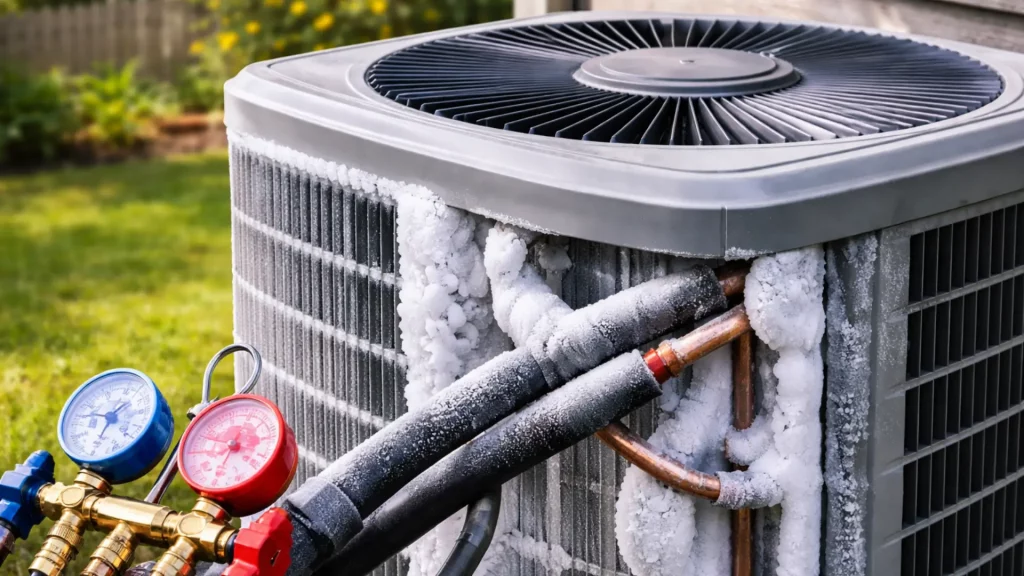
6. Frozen Evaporator Coils
A frozen evaporator coil can block airflow almost entirely and prevent the system from cooling effectively.
Common Causes of Coil Freezing
- Dirty air filters
- Restricted airflow
- Low refrigerant levels
- Dirty evaporator coils
- Blower motor malfunctions
While turning off the system may allow the ice to melt, the underlying issue must be corrected to prevent recurrence.
7. Incorrect Thermostat Settings
In some cases, airflow concerns are related to thermostat settings rather than mechanical problems.
Thermostat Settings to Review
- Confirm the system is set to the correct mode
- Verify the temperature setting is appropriate
- Check whether the fan is set to Auto or On
- Replace batteries if the thermostat is battery-powered
Incorrect settings can affect system operation and create the impression of weak airflow.
8. Poorly Designed or Undersized Ductwork
Some homes experience chronic airflow problems because the duct system was not properly designed.
Ducts that are too small, excessively long, or poorly balanced can restrict airflow and prevent conditioned air from reaching certain areas effectively.
Common Effects
- Persistent hot and cold spots
- Inconsistent airflow between rooms
- Excessive noise from the duct system
- Reduced system efficiency
Correcting design issues may require a professional airflow analysis and duct modifications.
9. Aging HVAC Systems
As HVAC systems age, components naturally lose efficiency and performance.
Wear and tear on blower motors, internal components, and duct connections can gradually reduce airflow and compromise comfort.
When Age Becomes a Factor
Most central HVAC systems have an expected service life of 10 to 15 years. Older systems that require frequent repairs or struggle to maintain consistent airflow may be nearing the end of their useful life.
How to Improve HVAC Airflow
Many airflow issues can be prevented or resolved through regular maintenance.
Recommended steps include:
- Replacing air filters on schedule
- Keeping vents open and unobstructed
- Cleaning supply and return grilles
- Scheduling annual HVAC maintenance
- Inspecting ductwork for leaks or damage
- Ensuring thermostat settings are correct
Routine maintenance helps maintain comfort, efficiency, and equipment reliability.
Conclusion
Poor HVAC airflow can result from a range of issues, including clogged air filters, blocked vents, dirty coils, duct leaks, blower motor failures, and aging equipment. Left unresolved, these problems can reduce comfort, increase energy costs, and shorten the life of the HVAC system.
Prompt attention to airflow issues and regular preventive maintenance are the most effective ways to ensure reliable performance and year-round indoor comfort.
FAQs About Poor HVAC Airflow
What is the most common cause of poor HVAC airflow?
A dirty air filter is the most common cause. Replacing the filter is often the first and simplest solution.
Why is airflow weak in only one room?
The issue may be caused by a blocked vent, duct leak, or improperly balanced ductwork serving that room.
Can poor airflow cause my evaporator coil to freeze?
Yes. Restricted airflow reduces heat transfer across the coil, which can lead to ice formation.
How often should air filters be replaced?
Most residential filters should be replaced every one to three months, depending on usage and indoor conditions.
Does poor airflow increase energy costs?
Yes. Restricted airflow forces the HVAC system to run longer and consume more electricity or fuel.