





Many people use the terms “ducts” and “ductwork” interchangeably, but they don’t mean exactly the same thing. In casual conversation, the difference may not matter much. But when it comes to HVAC performance, energy efficiency, or troubleshooting airflow issues, understanding this distinction becomes important.
This confusion often leads to wrong decisions. For example, someone might focus on cleaning vents when the real issue is leaking ductwork behind the walls. To avoid that, you need a clear understanding of how the system actually works.
What Is Ductwork in HVAC Systems?
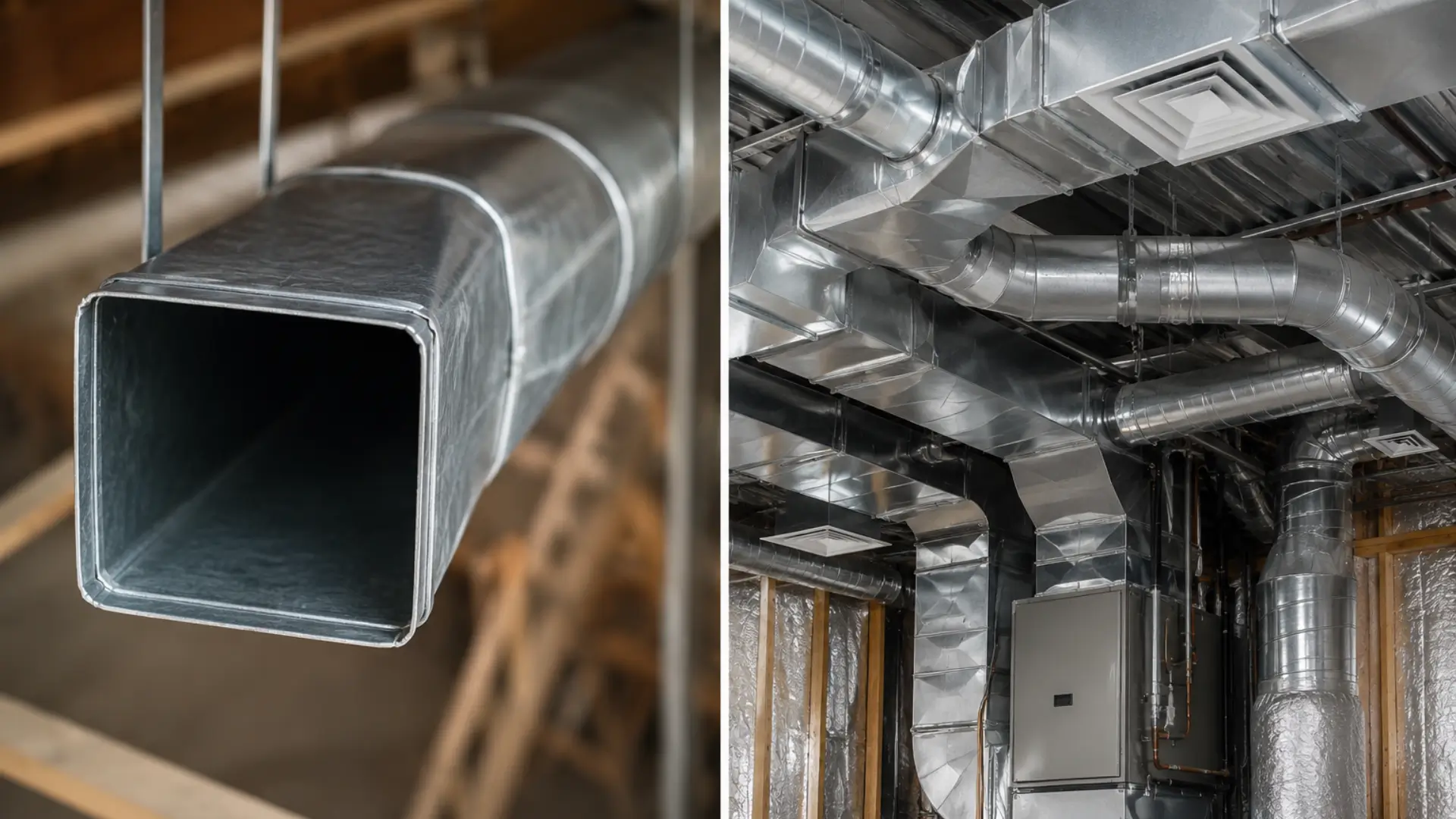
Ductwork refers to the complete network of air distribution within an HVAC system. It includes everything responsible for moving air from the unit to different rooms and back again.
This system is made up of multiple components such as supply ducts, return ducts, connectors, joints, dampers, insulation, and vents. All these parts work together to maintain proper airflow and temperature balance.
Ductwork is not just about moving air. It plays a key role in controlling pressure, reducing energy loss, and maintaining consistent indoor comfort. If the system is poorly designed or installed, it can significantly reduce overall efficiency.
What Are Air Ducts?
Air ducts are the individual pathways through which air travels within the ductwork system. Each duct has a specific function depending on its role.
Supply ducts deliver cooled or heated air into rooms, while return ducts carry air back to the HVAC unit for reconditioning. These ducts come in different materials and shapes, which directly affect airflow and durability.
The choice of duct type is not just about cost. It influences how efficiently air moves through the system and how well the HVAC performs over time.
Read Also: What Are Air Ducts and How Do They Affect Airflow?
Ducts vs Ductwork: Key Differences
The difference is simple in definition but important in practice.
Ducts are individual components, while ductwork refers to the entire system made up of those components. However, the real distinction lies in how they impact performance.
| Factor | Ducts | Ductwork |
|---|---|---|
| Scope | Individual air channels | Complete air distribution system |
| Role | Carry air | Control airflow and system balance |
| Focus | Material and structure | Design, layout, sealing, efficiency |
| Impact | Local airflow | Overall HVAC performance |
If you only focus on ducts, you might miss larger issues within the system. Most performance problems are related to ductwork design rather than a single duct.
Types of HVAC Duct Systems
Choosing the right type of duct is not just about installation convenience. It directly affects airflow, efficiency, and long-term performance.
1. Flexible Ducts
Flexible ducts are made with a wire coil covered in plastic and insulation. They are commonly used in residential setups because they are easy to install and can fit into tight spaces.
They are cost-effective and quick to install, but they require careful handling. If they are bent too sharply, sagging, or stretched incorrectly, airflow gets restricted. This can reduce system efficiency and lead to uneven cooling. Flexible ducts work best for short connections, not long or complex runs.
2. Rigid Ducts
Rigid ducts maintain their shape and allow air to flow more consistently. Because they don’t bend or sag, they create less resistance and support better airflow.
They are more reliable over time and are often used in systems where performance is a priority. However, they are more expensive and require proper planning during installation.
3. Sheet Metal Ducts
Sheet metal ducts are widely considered the most durable option. Made from galvanized steel or aluminum, they provide a smooth surface for airflow and are less likely to trap dust or moisture.
They are easier to clean and less prone to mold compared to other materials. This makes them suitable for both residential and commercial systems where hygiene and durability matter.
4. Fiberglass-Lined Ducts
Fiberglass-lined ducts are designed to reduce noise and improve insulation. They are useful in environments where sound control is important.
However, because fiberglass is a porous material, it can collect dust and moisture if not maintained properly. Over time, this can lead to air quality concerns.
What Actually Matters
There is no single “best” duct type. The right choice depends on system design, layout, and usage.
In most cases, a combination works best. Rigid or sheet metal ducts handle main airflow, while flexible ducts are used for short connections. The goal is to balance performance, cost, and durability.
How Ductwork Impacts HVAC Efficiency
Ductwork plays a major role in how efficiently an HVAC system operates. Even a well-functioning AC unit can underperform if the duct system is poorly designed.
Air leaks, poor insulation, and inefficient layouts can cause conditioned air to be lost before it reaches the room. This forces the system to work harder, increasing energy consumption.
Long or twisted duct paths also reduce airflow pressure, making it harder to maintain consistent temperatures across different rooms.
In many cases, high energy bills are linked more to ductwork issues than to the HVAC unit itself.
Common Problems in Ducts and Ductwork
Ductwork problems are often hidden but have a direct impact on comfort and efficiency.
- Air leaks at joints or connections allow conditioned air to escape, reducing system performance. Uneven cooling usually points to airflow imbalance caused by poor design or duct sizing.
- Restricted airflow can occur due to dust buildup or bent flexible ducts. Insulation issues can cause temperature loss, especially when ducts pass through unconditioned spaces.
- Unusual noise from ducts often indicates pressure issues or loose connections. In some cases, dust or moisture inside ducts can affect indoor air quality.
Maintenance Tips That Actually Matter
You don’t need a long checklist here, just what works.
- Inspect visible ducts for leaks or damage every few months
- Get professional duct inspection every 2 to 3 years
- Clean ducts when there is visible dust buildup or airflow reduction
- Seal joints properly instead of relying on temporary fixes
Most people either over-clean or completely ignore maintenance. Both are wrong.
Conclusion
The difference between ducts and ductwork is simple on the surface but important in practice. One is a component, the other is the system that determines how efficiently your HVAC actually performs.
If you’re serious about improving airflow, reducing costs, or fixing uneven cooling, stop thinking in terms of individual ducts and start evaluating the entire ductwork system. That’s where real performance gains happen.
FAQs About Ducts and Ductwork
Are ducts and ductwork the same thing?
No. Ducts are individual air channels, while ductwork refers to the complete system that distributes air throughout a building. The difference matters when diagnosing performance issues, because problems usually come from the system, not just a single duct.
How long does ductwork last?
Most duct systems last between 15 to 25 years, but lifespan depends heavily on material and installation quality. Sheet metal ducts last longer, while flexible ducts tend to degrade faster if not installed properly.
Can bad ductwork increase energy bills?
Yes, and often more than people expect. Leaks, poor insulation, and bad design can waste a large portion of conditioned air, forcing your HVAC system to work harder and consume more energy.
How do I know if my ductwork needs repair or replacement?
If you notice uneven temperatures, weak airflow, rising energy bills, or excessive noise, your ductwork likely has issues. Minor leaks can be repaired, but if the design itself is flawed, replacement or redesign is the better long-term solution.
Is duct cleaning really necessary?
Not as often as many companies claim. Cleaning is useful when there is visible dust buildup, mold, or airflow blockage. Routine cleaning without a clear issue doesn’t add much value.