





An air conditioning system is only as effective as the ductwork connected to it. While many property owners focus on the AC unit itself, the duct system is what distributes cooled air throughout the building. If ducts are poorly designed, leaking, or made from the wrong material, even a high-quality air conditioner may struggle to perform efficiently.
That is why understanding the different types of AC duct is essential when planning a new HVAC installation, upgrading an existing system, or improving indoor comfort.
In this guide, we explain the most common AC duct types, how they work, their advantages and disadvantages, and how to choose the best option for your property.
What Are AC Ducts?
AC ducts are channels that carry conditioned air from the HVAC unit to different rooms and return indoor air back to the system for re-cooling. They are a core part of central air conditioning systems used in homes, offices, retail spaces, and commercial buildings.
A complete duct system generally includes:
- Supply ducts – Deliver cooled air into rooms
- Return ducts – Pull indoor air back to the HVAC unit
- Registers and vents – Control air delivery in each room
- Insulation – Helps reduce temperature loss and improve efficiency
Proper ductwork design ensures balanced airflow, lower energy costs, and consistent comfort across the building.
Also Read: What Are Air Ducts and How Do They Affect Airflow?
Why Choosing the Right AC Duct Type Matters
Not all duct systems perform the same way. The type of duct material and installation method can directly affect system efficiency and indoor comfort.
The right duct type can help with:
- Faster and more even cooling
- Lower electricity consumption
- Improved airflow performance
- Reduced system noise
- Better indoor air quality
- Longer HVAC equipment life
Choosing the wrong duct type can lead to energy waste, hot and cold spots, and frequent maintenance issues.
Main Types of AC Duct
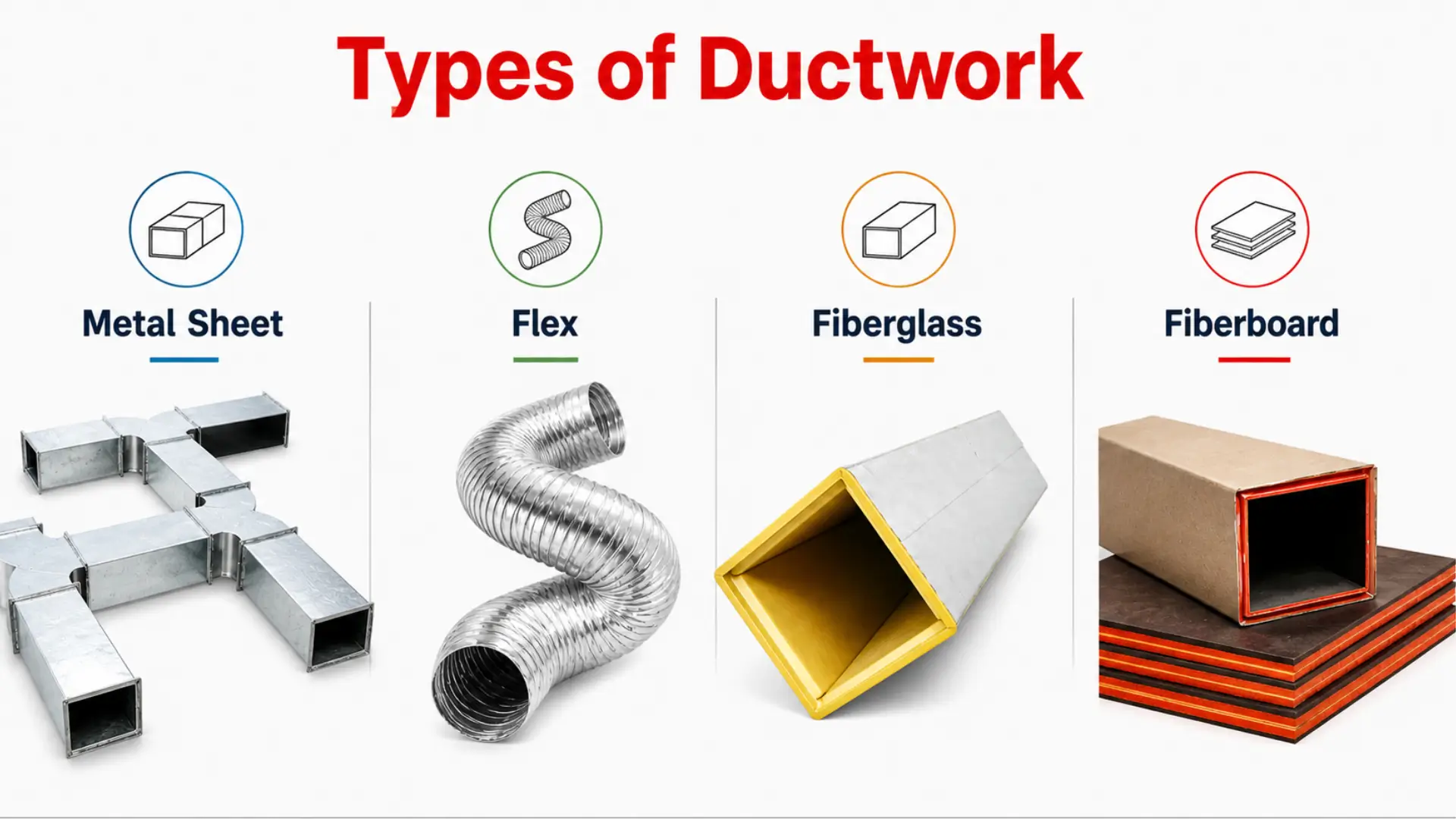
There are four primary duct types commonly used in residential and commercial HVAC systems.
1. Flexible Ducts
Flexible ducts are made from a coiled wire frame covered with a plastic inner liner and outer insulation. They are widely used in residential HVAC systems because they are lightweight, affordable, and easy to install.
Their flexible design allows installers to route them around beams, walls, and other obstacles, making them ideal for tight ceiling or attic spaces.
Advantages
- Cost-effective installation
- Easy to fit in confined spaces
- Lightweight and quick to install
- Suitable for most homes
Limitations
- Airflow can reduce if bent sharply
- May sag if unsupported
- Shorter lifespan than rigid ducts
Best Applications
- Residential homes
- Apartments
- Renovation projects
- Attic and false ceiling installations
2. Sheet Metal Ducts
Sheet metal ducts are rigid ducts made from galvanized steel or aluminum. They are known for strength, durability, and excellent airflow efficiency.
Because the inner surface is smooth, air moves with less resistance, helping the HVAC system operate more effectively.
Advantages
- High durability and long service life
- Better airflow performance
- Easier to clean and maintain
- Lower risk of mold accumulation
Limitations
- Higher upfront cost
- Requires professional fabrication and installation
Best Applications
- Large homes
- Offices
- Commercial buildings
- Long-term HVAC installations
3. Fiberglass Lined Ducts
Fiberglass lined ducts are metal ducts with fiberglass insulation installed on the interior or exterior surface. They are designed to improve thermal efficiency while reducing noise from airflow.
These ducts are commonly selected for buildings where quiet operation is important.
Advantages
- Reduces HVAC noise
- Helps maintain air temperature
- Controls condensation
- Improves comfort in multi-room spaces
Limitations
- Requires regular inspection
- Damaged lining may affect performance
Best Applications
- Office buildings
- Hotels
- Conference rooms
- Homes requiring quieter airflow
4. Fiberboard Ducts
Fiberboard ducts are made from compressed fiberglass panels coated with foil. They are lightweight, insulated, and often used as a budget-friendly alternative to metal duct systems.
Advantages
- Lower material cost
- Built-in insulation
- Lightweight and easy to handle
Limitations
- Less durable than sheet metal
- Can degrade over time
- Not ideal for high-demand commercial use
Best Applications
- Small residential buildings
- Budget HVAC projects
- Moderate-use cooling systems
Types of AC Duct by Function
Apart from material, ducts are also divided by their purpose in the HVAC system.
1. Supply Ducts: Supply ducts deliver cool air from the AC unit into rooms.
Example: Air coming from ceiling vents in bedrooms or living rooms.
2. Return Ducts: Return ducts pull warm indoor air back to the HVAC unit so it can be cooled again.
Why Important: Without proper return ducts, the system struggles and cooling becomes uneven.
3. Exhaust Ducts: Exhaust ducts remove unwanted air, moisture, smoke, or odors.
Common Areas:
- Bathrooms
- Kitchens
- Laundry rooms
Comparison Table
| Duct Type | Cost | Lifespan | Airflow | Best Use |
|---|---|---|---|---|
| Flexible | Low | Medium | Medium | Homes |
| Sheet Metal | High | High | High | Commercial / Premium Homes |
| Fiberglass | Medium | Medium | Medium | Quiet Buildings |
| Fiberboard | Low | Medium | Medium | Budget Projects |
How to Choose the Right AC Duct
Before selecting ductwork, consider the following factors:
- Building Size: Larger properties typically require larger or more durable duct systems.
- Layout Complexity: Tight ceiling spaces or complex layouts may favor flexible ducts.
- Budget: Initial installation cost and long-term maintenance should both be considered.
- Energy Efficiency Goals: Well-sealed and properly insulated ducts reduce cooling loss.
- Maintenance Requirements: Metal ducts are generally easier to clean and maintain.
Signs Your Ductwork May Need Replacement
Over time, duct systems can wear out or become inefficient.
Common warning signs include:
- Uneven cooling between rooms
- Weak airflow from vents
- High electricity bills
- Excess indoor dust
- Whistling or rattling sounds
- Visible leaks or damaged ducts
Frequently Asked Questions
1. What are the main types of AC duct?
The most common types are flexible ducts, sheet metal ducts, fiberglass lined ducts, and fiberboard ducts.
2. Which AC duct is best for residential homes?
Flexible ducts are widely used in homes due to lower cost and easy installation, while sheet metal ducts offer better long-term durability.
3. Which duct type provides the best airflow?
Sheet metal ducts generally provide the best airflow because of their smooth interior design.
4. How long do AC ducts last?
Depending on material and maintenance, duct systems can last between 10 and 30 years.
5. Can old ducts increase energy bills?
Yes. Leaking or poorly insulated ducts can waste cooled air and force the HVAC system to work harder.
Final Thoughts
Understanding the different types of AC duct is essential for creating an efficient and reliable air conditioning system. While the AC unit receives most of the attention, the ductwork determines how effectively cooled air reaches each room.
Flexible ducts are practical and affordable, sheet metal ducts offer superior durability, and insulated options help improve comfort and noise control. The best choice depends on your property size, budget, and performance goals.
For the best results, consult an HVAC professional to design a duct system that matches your building’s cooling requirements.